1
Floatation Placement
Attach the VR2AR’s float attachment bracket to
a floatation device capable of withstanding
pressure since it will be submerged. Hard
skinned floatation devices are recommended.
Position the float between 1 – 3 meters (3 – 10
feet) from the receiver to reduce the effect the
float has on the VR2AR’s detection range.
Objects near the hydrophone can block acoustic
signals, causing a “shadow zone” where tags are
not heard. Increasing the distance to the float
will reduce the shadow area, as illustrated here.
CAUTION: The hydrophone
must be kept free of
mooring lines and
obstructions.
Objects around the hydrophone will
adversely affect the detection range
of the VR2AR transceiver.
Tilt
Always check the tilt of the
transceiver after it is deployed to
verify it is vertical with the
hydrophone pointing up (0 - 11°).
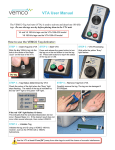
This is done using a VR100 and a
transponding hydrophone. Details
are found in the VR100 Acoustic
Communication manual.
Biofouling
Some customers use a rubber shrink tape, such as
DAFLEX ST250 Cold Shrink Tape, available from
Digikey (W211-ND), to prevent biofouling on the VR2AR
transceiver. It can be used to cover the transceiver body
(don’t cover the hydrophone or the Release Valve) and
does not leave a glue residue when removed. Another
option is to use an antifouling paint, such as Interlux
Micron CSC.
Keep the
hydrophone
uncovered to
prevent
acoustic
dampening.
Never cover the Status
Light/Release Valve.
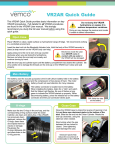
Basic instructions for using a
VR2AR are found in the VR2AR
Quick Guide while instructions for
communicating acoustically with
a VR2AR while it is deployed are
found in the Transceiver Field
Communication Quick Guide.
The release valve must be able to pop
open if needed and must not be blocked
by tape or paint.
www.vemco.com
+1-902-450-1700
DOC-5640-01