1
9
#
qf
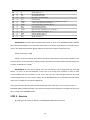
Anthrpogenic heat flux [W m-2]
10
#
U
Wind speed [m s-1]
11
R
RH
Relative Humidity [%]
12
R
Tair
Air temperature [°C]
13
O
pres
Barometric pressure [kPa]
14
O
rain
Rainfall [mm]
15
R
kdown
Incoming shortwave radiation [W m-2], Must be > 0 W m-2.
16
#
snow
Snow [mm], Required if SnowUse = 1
17
#
ldown
Incoming longwave radiation [W m-2]
18
#
fcld
Cloud fraction [tenths]
19
#
Wuh
External water use [m3]
20
#
xsmd
Observed soil moisture [m3 m-3 or kg kg-1]
21
#
lai
Observed leaf area index [m2 m-2]
22
O
kdiff
Diffuse radiation [W m-2]
23
O
kdir
Direct radiation [W m-2]
24
#
wdir
Wind direction [°]
R = Required, O = Optional, # = Net required for SOLWEIG
IMPORTANT! The direct-beam radiation (Kdir) used as input in the SOLWEIG model is not the
direct shortwave radiation on a horizontal surface but on a surface perpendicular to the light source.
Hence, the relationship between global radiation and the two separate components are:
avkdn = Kdir sin(h) + Kdiff
where h is the sun altitude. Since diffuse and direct components of short wave radiation is not
common data, it is also possible to calculate diffuse and direct shortwave radiation by ticking the box
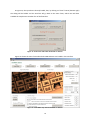
in Figure 16 Reindl et al. (1990).
IMPORTANT! As from version 2014a, the hour time stamp is the average from the time step
before, i.e. hour 3 is the time between 2 and 3 am in an hourly time resolution is used. As from
version 24014a the time resolution is not set to one hour but could change based on the input
meteorological data. As from version 2015a, the file ModelledYears.txt is excluded and information
about year is added into the meteorological file.
Leap years are taken into account and will be determined for each year. In the current version of
SOLWEIG (2015a), Daylight Savings is not used and could therefore be ignored. Examples of the input
files is found in the ‘test files’ folder.
STEP 5 - Execute
By clicking on the “Execute” button, the SOLWEIG model will be launched.
16