1
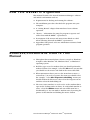
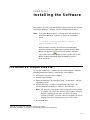
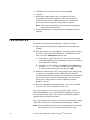
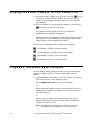
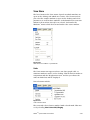
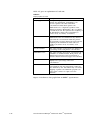
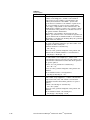
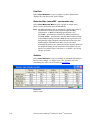
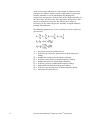
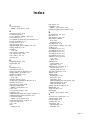
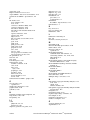
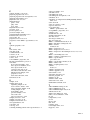
Module 2: Charging Efficiency The charging efficiency is the fraction of the particles of a given size that have a certain number of charges at equilibrium. The fraction of spheres and aggregates that assume unit charge after bipolar charging in general differ. Expressions for calculating the charge distributions are needed for both. The bipolar charging efficiency of spheres used in the Aerosol Instrument Manager® software is given by the Fuchs charge distribution. The charging efficiency of aggregates, ηagg, (Wen et al., 1984) is given as: η agg = ( e (πD qe kT ) 1 2 ) n − n p 2 e2 p exp − Dqe kT (2) Where, n p is the number of elementary charges n p is the median charge number e is the electronic charge k is the Boltzmann’s constant T is the absolute temperature Dqe is the charging equivalent diameter (Np ≥ 10) 2aN p Dqe = (3) ln(2 N p ) The median charge number is given by the following equation: np = Dqe kT 2e 2 N Z ln + + N−Z− (4) Where, N+ Z+ N− Z− is the ion concentration ratio is the ion mobility ratio, For air, this ratio is usually taken to be 1.4/1.6 From equations 1 to 4, the charge distribution for aggregates can be determined as a function of the mobility diameter. Scanning Mobility Particle Sizer (SMPS) Spectrometer Nanoparticle Aggregate Mobility Analysis Software Module H-5