1
In accordance with our policy of continual improvement, Microsolve C.C. reserve the right to alter specifications,
materials and dimensions without prior notice. E&OE.
Unpacking
When you purchase the unit, the battery and solar panel are not provided in the same box, and must be purchased
separately. In some cases, the supplier may have sold a bundle which may include the battery and solar panel.
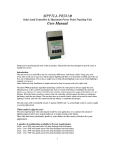
The following is a list of the components that come together in the Off Grid Charge Inverter. Off Grid Charge
Inverter control unit
10 amp Mains cable with a 16A 3 Pin plug and an IEC socket
5 meter - 2 core cable, with a 2 pin screw socket on one side and with a PV plug and socket to connect to the PV
panel on the other side
Check for damage to the control unit during shipping. If the unit is damaged in any way, we recommend that you
return it to the supplier to verify proper operation.
Sine Wave Output
Depending on the model you have purchased, it can either be a modified Sine Wave or a Pure Sine Wave.
The unit converts the 12V DC from the battery to 230V AC using power electronics. The AC can used to power up a
number of mains equipment. It is important that you do not overload the inverter. In the case that the inverter is
overloaded, it will shut down, and will require you to switch the unit off, remove the loads, and switch on again.
Reconnect the loads one a time to see which load is over loading the inverter. If the inverter you have is too small
for your application, then you may have to purchase an inverter which can handle more load. Speak to your
supplier to see what other solutions that they may have for your application.
The inverter output is controlled by the On/Off switch next to the 3 pin socket at the rear of the unit. When the
mains is available, there is power at the 3 pin socket, irrespective if the switch is in the On or Off position. When the
mains fails, and the switch is in the ‘Off’ position, the inverter is disconnected and there is no power to the load.
When the mains returns, the internal switch will immediately pass the mains to the socket.
In the case that the switch is in the ‘On’ position, while mains is available, there will be power at the socket. When
there is a mains failure, the internal relay switches over, and the inverter starts, and approximately 2 seconds later,
there will be power at the socket and the load is powered by the inverter. When the mains returns, the internal
relay immediately transfers the mains to the socket, and switches the inverter off.
This ensures that the inverter only works when the user wishes to have battery backup, and preserves the battery
should there be a mains failure during a time the user is not making use of the battery backup, thereby preserving
the battery for when it is required by the user.
When the switch is in the off position, the inverter does not run, placing the unit in a low power drain mode
preserving the energy in the battery for when you need it. In this mode the battery is always maintained at full
power via the solar panel or mains input.