1
2
L OCKS : H ARDWARE S UPPORT
20.1
Test-And-Set
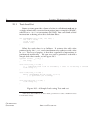
Some systems provide a form of what is called test-and-set in
a single atomically-executed instruction (one example is SPARC,
which has a ldstub instruction [WG00]). You can think of this
instruction as doing what this function does:
int TestAndSet(int *lock, int new) {
int old = *lock;
*lock = new;
return old;
}
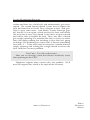
What the code does is as follows. It returns the old value
pointed to by the lock, and simultaneously updates said value
to new. The key, of course, is that this sequence of operations is
performed atomically 1 . We can use such a primitive to build a
simple lock that works, as in Figure 20.1.
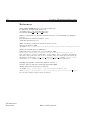
typedef struct __lock_t {
int flag;
}
void init(lock_t *lock) {
// 0 indicates that lock is available, 1 that it is held by a thread
lock->flag = 0;
}
void lock(lock_t *lock) {
while (TestAndSet(&lock->flag, 1) == 1)
; // spin-wait (do nothing)
}
void unlock(lock_t *lock) {
lock->flag = 0;
}
Figure 20.1: A Simple Lock using Test-and-set
1
How does the hardware do this? Well, you’ll have to take a hardware class
to learn that. Sorry!
O PERATING
S YSTEMS
A RPACI -D USSEAU