1
INTRODUCTION
Ultrasonic cleaning is based on the cavitation effect caused by high
frequency ultrasonic wave vibration signal in the fluid. Microscopic
bubbles are formed, and they implode violently causing the cavitation
which create an intense scrubbing action on the surface of the item
being cleaned. The bubbles are small enough to penetrate microscopic
crevices, cleaning them thoroughly and consistently.
Ultrasonic cleaning is extremely effective at removing dirt and grime
which would normally require tedious manual cleaning by hand. It has
been used to clean a wide variety of instruments and mechanical parts
such as carburetors, returning them to almost “like new” condition
without damage to delicate parts.
PREPARATION:
1. Carefully unpack the cleaner and remove all traces of packing materials from it.
Visually inspect the cleaner for any parts that may have become loose or damaged
during transit.
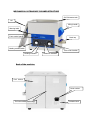
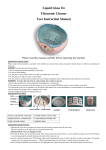
Contents:
a: Main machine
b: Sound proof lid.
c: Power lead
d: Outlet filter
e: Mesh basket (Optional)
2. Place the cleaner on a flat, clean surface where the cooling fans will receive adequate
ventilation and ensure all controls are set to off. Also ensure the drain tap is in the
closed position.
3. Ensure the power lead is securely plugged into the cleaner and that no part of the lead
is likely to come into contact with moisture.
4.
Carefully fill at least 1/2 of the tank with a solvent solution. For demanding
cleaning we recommend a small amount of washing up liquid, this will help