1
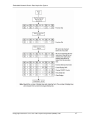
Embedded Network Client & Data Acquisition System 3.2.1.5 UDP Implementation Its simplicity and bandwidth efficiency make it an important part of some multimedia Internet protocols. This project supports UDP protocol as we had limited amount of memory on chip. First of all UDP is an unreliable protocol, not that it should be avoided, but rather that packets can get lost without warning and may require retransmission. It is deterministic in the sense that each packet, or timeout, triggers the next event without regard to what state the connection is in. This simplifies programming and makes debugging much easier. There are 20 bytes of IP header, then 8 bytes of UDP header, and the UDP data. The first two 2 byte fields are the source and destination port numbers. The port numbers are important to identify what process gets the UDP data. The next two bytes are the UDP length, eight bytes of UDP header plus the length of the UDP data. This value is redundant because it can be calculated from the IP header by subtracting the header length from the total length. The last 2 bytes of the UDP header are the 16 bit one’s complement checksum of the pseudo header, the UDP header, and the UDP data. The pseudo header is not transmitted but the following 12 bytes are added to the checksum anyway. The 32 bit source and destination addresses, the 16bit UDP address, and the 8bit protocol field are extended to 16 bits to ensure that the UDP data is going to the correct IP address. The checksum is optional and set to zero if not used. Since zero means no checksum, then a valid checksum that adds up to zero must be inverted to 0xFFFF. If the UDP data is an odd number of bytes, your 16 bit checksum routine will need to pretend that there is an extra byte 0x00 at the end. The format of the UDP data will depend on which port you are connecting to and which protocol is using the data. © Copyright 2004 Defense Research & Development Organization (DRDO), India 27