1
10.5. GROUND STATE SECOND-ORDER PROPERTIES WITH MP2 AND CC2203
are identical and no lagrangian multipliers need to be determined. The extra costs
(i.e. CPU and wall time) for the calculations of the transitions moments are similar
to the those for two or three iterations of the eigenvalue problem, which reduces the
total CPU and wall time for the calculation of a spectrum (i.e. excitation energies
and transition moments) by almost a factor of three.
10.4.2
Transition moments between excited states
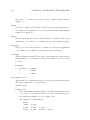
For the calculation of transition moments between excited states a set of Lagrangian
multipliers N̄µ has to be determined instead of the M̄µ for the ground state transition
moments. From these Lagrangian multipliers and the left and right eigenvectors one
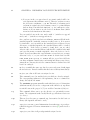
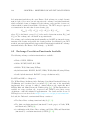
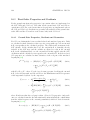
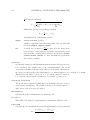
obtaines the “right” transition moment between two excited states i and f as
o
Xn
ξ
A
MfV←i =
Dpq
(N̄ f i ) + Dpq
(Ē f , E i ) V̂pq .
(10.22)
pq
where V̂ are the matrix elements of the perturbing operator. A similar expression is
obtained for the “left” transition moments. The “left” and “right” transition moments
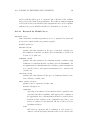
are then combined to yield the transition strength
∗ o
1 n V1
V2
2
1
SVif1 V2 =
Mi←f MfV←i
+ Mi←f
MfV←i
(10.23)
2
As for the ground state transitions, only the transition strengths SVif1 V2 are a wellV
and MfV←i .
defined observables but not the transition moments Mi←f
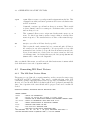
The single-substitution parts of the transition Lagrangian multipliers N̄µ are saved
in files named CCNE0-s--m-xxx.
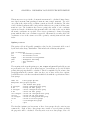
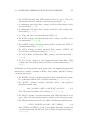
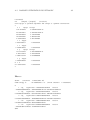
To obtain the transition strengths for excitations between excited states the keyword
tmexc must be added to the data group $excitations. Additionally, the initial and
final states must be given in the same line; else the input is same as for the calculation
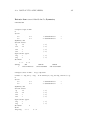
of excitation energies and first-order properties:
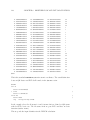
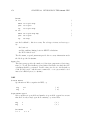
$ricc2
cc2
$excitations
irrep=a1 nexc=2
irrep=a2 nexc=2
tmexc istates=(a1 1) fstates=all operators=diplen
10.5
Ground State Second-order Properties with MP2
and CC2
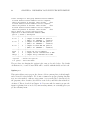
For closed-shell restricted Hartree-Fock reference states second-order properties for
one-electron perturbation can be computed at the MP2 and the CC2 level. For