1
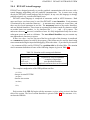
13.3. TEXT OF NUMERICAL FREQUENCY ANALYSIS
13-5
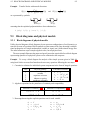
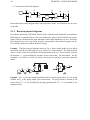
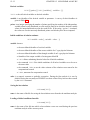
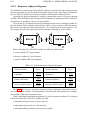
source is the user-defined identifier of the source
type is the source type, either FE or FJ
+node and -node are identifiers of diagram nodes between which the source is placed
series is an identifier of the series element configuration with the source
amplitude is a numeric constant or symbolic expression specifying the source amplitude
phase is a numeric constant or symbolic expression specifying the source phase in radians. If
ϕ = 0, the string @0 can be omitted.
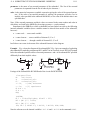
Frequency analysis
FREQ [/[LIN]] [min max];
or
FREQ = f1 , f2 ,. . . ;
min and max are numeric constants determining the lower and upper limits of the frequency
interval
f1 , f2 ,. . . are numeric constants specifying individual frequency points
/LIN , or just /, is the string setting the linear frequency scale. If this string is omitted the
scale is logarithmic.
If the statement FREQ is missing, DYNAST assumes the default frequency range from 10−1
to 10.
Required variables
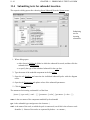
PRINT [(points)] component.variable [, component.variable. . . ];
points is an integer setting the number of frequencies at which the frequency characteristics
should be evaluated (501 by default)
variable is the identifier of the required variable
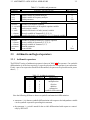
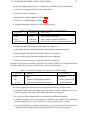
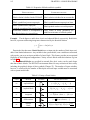
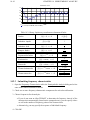
component is the component identifier in agreement with Table 13.2
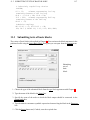
Execution of the numerical frequency analysis is activated by the RUN; command. Results
are stored in an O file.
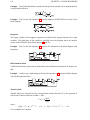
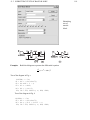
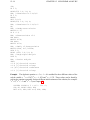
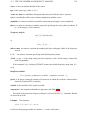
Example.
The statement
PRINT (60) MOD.I.R1, MOD.A;
results in a table giving modules of variables I.R1 and A at 60 points.