1
INTERNATIONAL JOURNAL OF CIRCUITS, SYSTEMS AND SIGNAL PROCESSING
The most remarkable difference lies in the fact that
ARM7TDMI is based on the von Neumann architecture while
Cortex-M3 is based on the Harvard architecture. From the
practical point of view, the Cortex-M3 higher efficiency is
related to its 1.25 DMIPS/MHz unlike the ARM7TDMI which
offers only 0.95 DMIPS/MHz. The energy consumption
comparison also favours the Cortex-M3 with 0.19mW/MHz
unlike the ARM7TDMI with 0.28mW/MHz.
The Cortex-M3 architecture disposes of many remarkable
features. Among the others, we can mention the program
branching prediction, the interrupt faster response (12 clock
cycles vs. 24-42 clock cycles at ARM7TDMI), hardware
implemented advanced debugging interface, reduced energy
consumption modes, and a sophisticated memory lock system.
There is a more detailed description of both architectures
differences in the ARM company official report [4].
All above mentioned qualities have influenced the final
ARM Cortex-M3 architecture selection with LPC1769
microcontroller.
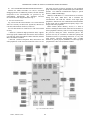
Fig. 2 - LPC1769 microcontroller block diagram [11]
Issue 2, Volume 7, 2013
127