1
Speakerphones
(continued)
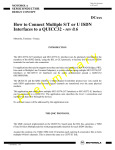
Voice Switched Speakerphone Circuit
MC33219AP, ADW
TA = –40° to +85°C, Case 724, 751E
The MC33219A Voice Switched Speakerphone Circuit
incorporates the necessary amplifiers, attenuators, level
detectors, and control algorithm to form the heart of a high
quality hands–free speakerphone system. Included are a
microphone amplifier with adjustable gain, and mute control,
transmit and receive attenuators which operate in a
complementary manner, and level detectors and background
noise monitors. A dial tone detector prevents dial tone from
being attenuated by the receive background noise monitor. A
Chip Disable pin permits powering down the entire circuit to
conserve power.
The MC33219A may be operated from a power supply, or
it can be powered from the telephone line requiring typically
4.0 mA. The MC33219A can be interfaced directly to Tip and
Ring (through a coupling transformer for stand–alone
operation, or it can be used in conjuction with a handset
speech network and/or other features of a featurephone.
• Low Voltage Operation: 2.7 to 6.0 V
• 2–Point Sensing, Background Noise Monitor in Each Path
• Chip Disable Pin for Active/Standby Operation
• Microphone Amplifier Gain Set by External Resistors –
Mute Function Included
• Dial Tone Detector to Inhibit Receive Idle Mode During
Dial Tone Presence
• Volume Control Range: 34 dB
• Compatible with MC34119 Speaker Amplifier
Mute
Tx
Attenuator
Tx Output
Mike
Attenuator
Control
Rx
Attenuator
Speaker
Speaker
Amp
Rx Input
Bias
VCC
Chip Disable
Volume
Control
Analog and Interface Integrated Circuits
4.7–28
Motorola Master Selection Guide