1
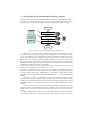
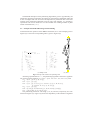
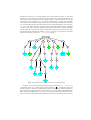
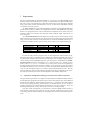
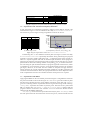
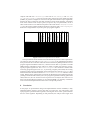
P (|PSG|) and the number of sub-paths ( |Πj |) for each of these segmentations. This example illustrates that in general fewer program segments cause a higher overall number of paths to be considered. 80 PB=100 Path Bound 1 5 10 20 100 |PSG| 30 6 3 2 1 #Paths ( |ʌj| ) 30 14 14 18 72 #Paths ( |ʌj| ) 70 60 50 40 PB=1 30 PB=20 PB=10 20 10 PB=5 0 0 10 20 30 Program segments ( |PSG| ) (b) Dependency between |PSG | and P |Πj | P Fig. 3. Dependency between number of segments (|PSG|) and number of sub-paths ( |Πj |) (a) Partitioning Results 5 Automated Test-Data Generation For each path that has been previously determined in the program segmentation step, we are interested in whether it is a feasible path. Feasible paths may contribute to the timing behavior of the application and thus have to be subject to execution-time measurements. 5.1 Problem Statement P As described previously the set of paths |Πj | has to be executed to perform the execution-time measurements. Therefore, it is necessary to acquire for each path πi ∈ Πj a suitable set of input-variable assignments such that the respective assignments at the function start causes exactly the control flow that follows πi . In contrast, for infeasible paths their infeasibility has to be proven to know that they cannot contribute to the timing behavior of the program. 5.2 Test-Data Generation Hierarchy When applying the method it turned out that the test-data generation process is the bottleneck of the analysis. Especially, model checking is very resource intensive. To improve performance we decided to use a combination of different methods for generating the input data. We start by using fast techniques and gradually use more formal and resource-consuming methods to cover the paths for which the cheaper methods did not found appropriate input data. Figure 4 shows the hierarchy of methods we apply. On the basic level test-data reuse is applied. This means that we reuse all existing test data for that application from previous runs. On the second level, pure random search is performed, i.e., all input variables are bound to random numbers. Third, heuristics like genetic algorithms can be used. Finally, all data that could not be found using the generation methods of level 1 to 3, are calculated by model checking. Especially, the infeasibility of paths can be proven only by model checking (at level 4). The actual