1
Nitrogen, Ammonia (0.02 to 2.50 mg/L NH3–N)
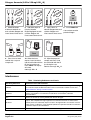
5. Add three drops
of Mineral Stabilizer to
each cylinder. Stopper and
invert several times to mix.
6. Add three drops of
Polyvinyl Alcohol
Dispersing Agent to each
cylinder. Stopper and
invert several times to mix.
7. Pipet 1.0 mL of
Nessler Reagent into each
cylinder. Stopper and
invert several times to mix.
9. Pour 10 mL of each
solution into a square
sample cell.
10. When the timer
expires, insert the blank
into the cell holder with the
fill line facing the user.
Press ZERO. The display
will show:
0.00 mg/L NH3 –N
11. Wipe the prepared
sample and insert it into
the cell holder with the fill
line facing the user.
8. Press TIMER>OK.
A one-minute reaction
period will begin.
Results are in mg/L NH3–N.
Interferences
Table 1 Interfering Substances and Levels
Interfering Substance
Interference Levels and Treatments
Chlorine
Remove residual chlorine by adding 2 drops of sodium arsenite for each mg/L chlorine (Cl2)
from a 250 mL sample. Sodium thiosulfate can be used instead of sodium arsenite. See
Sample Collection, Storage, and Preservation.
Hardness
A solution containing a mixture of 500 mg/L CaCO3 and 500 mg/L Mg as CaCO3 does not
interfere. If the hardness concentration exceeds these concentrations, add extra
Mineral Stabilizer.
Iron
Interferes at all levels by causing turbidity with Nessler Reagent.
Seawater
May be analyzed by adding of 1.0 mL (27 drops) of Mineral Stabilizer to the sample before
analysis. This complexes the high magnesium concentrations found in sea water, but the
sensitivity of the test is reduced by 30 percent due to the high chloride concentration. For best
results, perform a calibration, using standards spiked to the equivalent chloride concentration,
or distill the sample as described below.
Sulfide
Interferes at all levels by causing turbidity with Nessler Reagent.
Nitrogen, Ammonia
Page 2 of 6
NitrogenAmm_8038_NES.fm