1
Java-DSP (J-DSP); An On-line DSP Simulation Tool enabling Web-based Computer Labs
J-DSP Concept and Software by: Prof. Andreas Spanias, Ph.D.
Multidisciplinary Distance Learning Initiative (MIDL)
Department of Electrical Engineering, Arizona State University
Tempe, AZ 85287-5706, Email: spanias@asu.edu
1. Background
Java-DSP (J-DSP) (http://jdsp.asu.edu) is an educational program that enables on-line simulations and
web-based computer laboratories for use in Digital Signal Processing (DSP) courses. The initial version
of J-DSP has been developed in the ASU MIDL lab and tested in a senior-level Electrical Engineering
DSP course (EEE 407) during the academic year 1996-97. Portions of the software have been displayed
in the 1997 IEEE International Conference on Acoustics Speech and Signal Processing (ICASSP-97) in
Munich and a paper on this pilot study was published in the ICASSP-98 proceedings [1]. Since then, JDSP has been significantly upgraded with new functionality and its associated laboratory exercises are
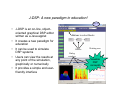
being continuously improved [2-11]. J-DSP is an object-oriented environment that enables students to
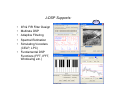
establish and run educational DSP simulations, such as, digital filter design, signal analysis, speech signal
processing, FFT-based spectral analysis, etc. J-DSP provides a user-friendly graphical user interface
(GUI) that is freely and universally accessible from the Internet using a browser such as the MS Internet
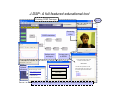
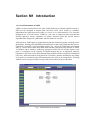
Explorer®1. The J-DSP GUI enables visual programming of DSP tasks on any platform directly from the
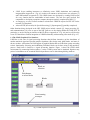
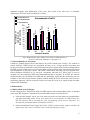
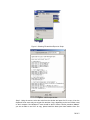
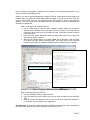
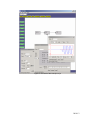
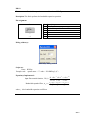
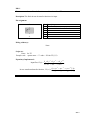
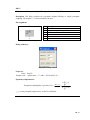
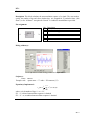
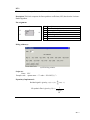
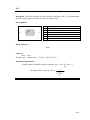
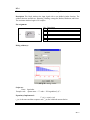
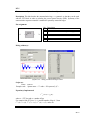
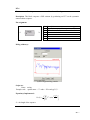
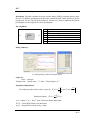
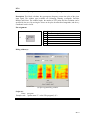
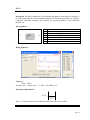
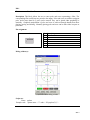
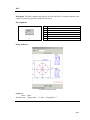
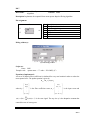
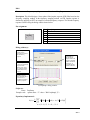
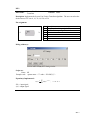
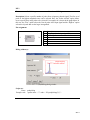
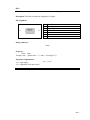
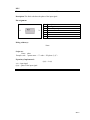
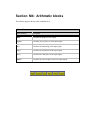
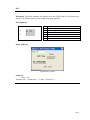
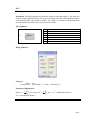
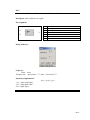
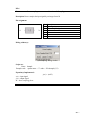
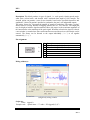
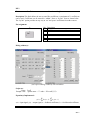
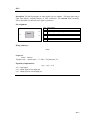
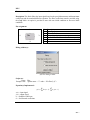
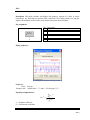
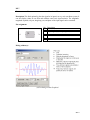
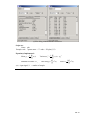
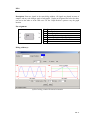
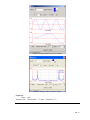
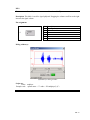
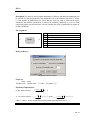
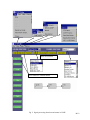
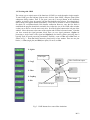
browser. In Appendix A, we show several figures that present the GUI of the software. We also
encourage the NEEDS reviewers to visit the web site (http://jdsp.asu.edu) and/or use the enclosed CD
ROM and view the AVI files that demonstrate some key functions of J-DSP. J-DSP is freely accessible,
platform independent, and created for non-for-profit use. J-DSP enables:
- students to establish and run quick simulations on the web,
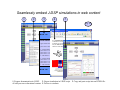
- students to see on-line interactive demos embedded in web lectures,
- students to perform on-line computer laboratories on the web,
- instructors to assign J-DSP-based exercises,
- instructors to embed interactive demos in their web lecture content.
The J-DSP Version 1 (CD-ROM ISBN 0-9724984-0-0) is approximately 42,000 lines of Java code. To
fully support J-DSP, Prof. Spanias has developed a series of J-DSP laboratory exercises (see Appendix D)
that have been used in EEE 407. Assessment of J-DSP is carried on a semester-by-semester basis and
web-based assessment instruments have been developed and posted on the J-DSP web site. A more
formal and detailed assessment of the J-DSP software and its associated EEE 407 lab exercises was
conducted recently and results will be presented at the 2003 IEEE/ASEE Frontiers in Education
conference [6] (see copy of the assessment report and relevant paper in Appendix C). Assessment results
from this award have recently been submitted to the Online Evaluation Resource Library (OERL). A
comprehensive manual for J-DSP was also developed and posted on the internet and a hard copy of this
manual is in Appendix F. The free dissemination of J-DSP to other institutions started in the Fall of 2002.
A dissemination package was developed (Appendix C) and the J-DSP software and labs have been
disseminated to many prominent faculty members in ranked engineering programs. Universities that
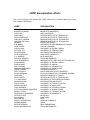
obtained free the J-DSP Version 1 executable software (ISBN 0-9724984-0-0) included MIT, U. Penn,
Georgia Tech., University of Minnesota, Rice University, and several others (see complete list Appendix
C-3). In the summer of 2000, NSF awarded a CCLI-EMD grant that enabled us to upgrade the DSP
functionality and extend the use of J-DSP in other related courses such as communications, image
processing, and controls [11]. The work on the NSF J-DSP project is ongoing and several new functions
are being developed. Such functions involve:
1
MS Internet Explorer is registered by Microsoft Incorporated. MATLAB is registered by The Mathworks. J-DSP is sponsored by ASU and
NSF CCLI EMD DUE 0089075.
1