1
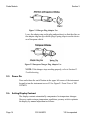
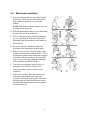
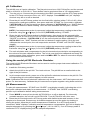
to insure that all air bubbles are removed. The o-ring lids have a 0.8 inch
hole sized to facilitate a dissolved oxygen probe and several smaller holes
to facilitate a circulation system (for mixing). These holes are sealed with
stoppers when not in use.
2.
The water column is gently aerated using an air stone until the dissolved
oxygen approaches saturation and core temperature stabilizes at lab
temperature.
3.
Overlying water column "blanks" are set up along side the sediment cores
to correct the SOD for demand due to water column BOD. These can be
set up in an empty tube or done in a BOD bottle.
4.
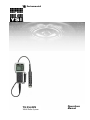
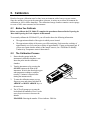
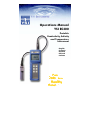
The dissolved oxygen meter (YSI Model 50 w/ stirrer) is calibrated.
5.
Cores are gently mixed between dissolved oxygen readings using a
circulation system or a mixing paddle.
6.
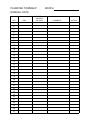
The lid stopper is removed, dissolved oxygen probe inserted, and initial
dissolved oxygen reading is taken. Prior to all dissolved oxygen readings,
the overlying water is gently mixed to insure dissolved oxygen uniformity.
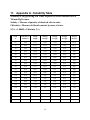
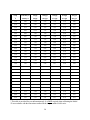
The time, temperature (from meter), and dissolved oxygen are recorded.
The dissolved oxygen probe is then removed and the lid stopper is
reinserted.
Readings are generally made every hour. Active sediments will
necessitate more frequent measurements and less active sediments less
frequent measurements.
7.
8.
Generally, the experiment is run until a dissolved oxygen depletion of at
least 2 to 4 mg/L has been achieved. If the dissolved oxygen for a core
depletes rapidly, the water column may be reaerated and the experiment
repeated as a replicate.
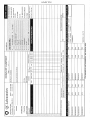
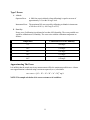
The sediment oxygen demand rate is derived from the SOD procedure raw data
(Step 8) by plotting the dissolved oxygen versus time for both the sediment core and
water column "blank", performing linear regressions to obtain slopes, and deriving the
SOD from the following equation: