1
connects to the dynamic database as detailed in the online
user guide [39].
ABBs Industrial Application. Our last application is
an industrial software system developed at ABB (ABBS ).
All of its important user preferences can be accessed and
modified in preference files. The definition and description
of these preferences are available in two online documents,
denoted as ABBD1 and ABBD2 . In the documentation,
real preference names are used as they appear in the preference files. There are 524 preferences defined in ABBD1
and 411 in ABBD2 . The system provides a help keyword
match utility (but only for preferences in ABBD1 ) similar
to about:config except that the user can type in multiple
keywords at a time. In fact, they can type in the entire
query. The keyword match will do an exact match on all
entered keywords, therefore any extraneous (or incorrect)
words will result in a failed search. For this use case we assume that the person doing the search is a technical support
engineer who is trying to help customers who have called
in on the help line. It can be time consuming to determine
what the user has done (or is trying to do) to the system
preference files, therefore we build this version of PrefFinder
to see if it will help in this scenario.
4.2
Obtaining and Running User Queries
For each of our systems, we obtained real user queries. For
Firefox and LibreOffice we went to online user forums (see [2]
[24]). We searched the forums using the keywords preference
and configuration and selected the first 100 (for Firefox) and
first 25 for LibreOffice that had a solution (or solutions) to
serve as an oracle. For the queries obtained from the Firefox
forums the oracle is simple to check since in most cases the
actual preference name is returned. In the LibreOffice forum
this is not as straight forward. Therefore, we restricted our
queries to ones in which a series of menu steps are provided
(which matches our intended use case). We then performed
the example steps, identified which preference changed in
the preference database, and then verified this by ensuring
that when we change that preference directly in the system,
that particular menu item changes as well. This preference
then serves as our oracle.
For ABBs we were unable to access the internal support
log, so we asked several independent system engineers to
write queries that they thought a user would ask based on
their experience. We only briefly described PrefFinder to
them without explaining the search mechanisms used in the
tool. We obtained 52 queries, of which 27 queries are from
the preferences in ABBD1 and 25 queries are from preferences in ABBD2 . For each query, they also provided answers
which serve as our evaluation oracles.
We then used PrefFinder to run each of the queries on
each system. We utilize command line versions and run the
queries 10 times each to get timing information. We also
compared a sample of results from the command-line and
GUI versions to validate that we are reporting the correct
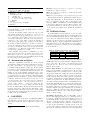
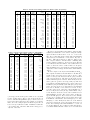
results. Table 3 shows a few example queries from the Firefox and LibreOffice forums. We provide the full set of open
source queries on our website.
4.3
Metrics
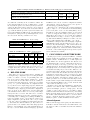
To answer RQ1, we qualitatively assess if it is feasible
to build multiple versions of the system and ask what is
involved in customizing each system. To answer RQ2, we
run all queries and evaluate whether the correct answer is
found and at which rank (for effectiveness). We also report
the PrefFinder execution time averaged over 10 executions
and a break even (BE) time for our open source systems
(for efficiency), described below. The execution time is the
time that a query takes to run. The evaluation time for
the returned result, however is harder to measure. Once a
person has the preference result list they must determine
which one is correct. Since we cannot accurately predict
(without bias) the time it would take someone to evaluate
each preference returned by PrefFinder, we report a metric
called the break even time. This metric tells us how long one
would need to spend per answer in PrefFinder to make the
tool no better than an existing approach (in this case a user
forum). We use the oracle pages from the user forums and
make the assumption that this is the first time this question
was asked (i.e. the question cannot be obtained by a simple
web query). Since we obtained our queries from the forums,
we can examine the time stamps from when the question
was initially asked and when it was first answered correctly.
We then use this time as the time it takes to answer this as
a new question on the forum.
To then calculate the break even time we ignore the execution runtime (but report it) since it is less than a minute
ime
. If
in all cases. We then calculate it as: BE = F orumT
Rank
for instance, an answer is found in the 3rd rank position and
the forum takes 30 minutes, it means that as long as a user
can evaluate each result returned by PrefFinder in less than
10 minutes on average, it will perform better.
To answer RQ3, we compared the Firefox queries with
the about:config utility and the ABBD1 queries with its
search utility. For this we had to split our queries into its
constituent keywords and try each one individually. For
the ABBD1 system, since its utility can search on multiple
keywords at once, we try the original query and then we
try all keywords together (KeyALL ) followed by each one
individually. The success (rate) and ranking of these results
are the metrics that we compare with PrefFinder.
4.4
Threats to Validity
The first threat to validity is that of generalization. We
have built PrefFinder on three different systems with different preference mechanisms and one is industrial so we believe
that this is representative of many real systems. We had to
select the queries from the forums, but we used a systematic
approach and did not try the queries on PrefFinder before
selecting them. The queries obtained from ABB may have
some bias since the engineers (unlike in tech support in the
real use case) are familiar with the system and the types of
questions users ask. But we believe they are still representative and may in fact bias the results towards the existing
approach. Finally, we may have mistakes in our data, but
we have cross-validated our questions using both a manual
and the command-line version. We are also making our open
source data available on line.
5.
RESULTS
In this section, we describe our results for each question.
5.1
RQ1: Different Instances of PrefFinder
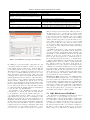
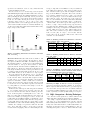
Figure 2 shows a screenshot for one of our versions of
PrefFinder – a plugin for Firefox. On the screen you can
see the query, the result (for the first 10 answers), including