1
OM9 - EPI2 Profibus DPV1 interface
Installation & Maintenance Instructions
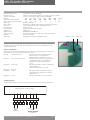
4.3 Profibus/hardwired mode selection
The EPI2 DPV1 interface manages the Profibus/hardwired mode selection by means of the input
indicated with HW MODE. The physical input accepts any voltage from 24 to 125 V DC or AC,
polarity insensitive.
When no voltage is applied, the actuator is Profibus controlled and it is possible to send commands
and read the status by Profibus DP.
When an appropriate voltage is applied to the HW MODE input, the actuator runs under hardwired
control. In this condition the Profibus master can only read the actuator status, while the actuator
follows the hardwired Open and Close controls connected to the terminal board.
For further details see the relevant wiring diagram and the user manual:
EPI2 Quarter-turn Electric Actuator IOM.
5. Profibus DP description
Profibus is a vendor-independent, open fieldbus standard used in a wide range of applications
in process automation. Vendor independence and openness are ensured by the international
standards EN 50170 and EN 50254. The DP communication profile is designed for data exchange
at the field level. The central controllers (i.e. PLC) communicate via a serial connection with field
devices (as sensors and actuators). Data exchange is mainly cyclic. The central controller (called
master) cyclically reads the input information from the field devices (called slaves) and cyclically
writes the output information to the slaves. In addition the Profibus DP provides communication
services for parameterization, alarm handling, and monitoring of intelligent field devices. The
maximum number of master and slave devices in a bus segment is 32 without repeaters. With
repeaters the number can be extended to 126 on one bus. The maximum cable length depends on
the speed of transmission. The higher the speed, the shorter is the length. For instance, with baud
rate 93.75 Kb/sec, the max cable length is 1,200 m without repeaters and 10,000 m with repeaters.
Mono-master or multi-master system configuration can be provided. Bus access is controlled by a
token passing procedure between masters and polling (master-slave procedure) between master
and slaves.
DP master class 1 (DPM 1): DP master class 2 (DPM 2):
Slave: This is the central controller that cyclically exchanges information
with the field devices. Typical devices are PLC, DCS or PC.
These devices are necessary for commissioning, maintenance and
diagnostics.
Field device, i.e. transmitters, actuators, drives, etc.
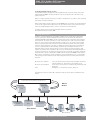
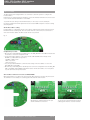
The figure below shows a Profibus DP configuration with two master devices and different slave
devices.
Logical token passing between master devices
Master
devices
PC
PLC
General
Drive
Transmitter
Slave devices
EPI2 actuators
Pentair reserves the right to change the contents without notice
page 3