1
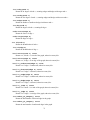
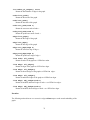
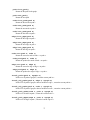
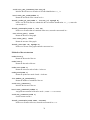
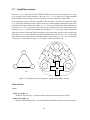
4.3 Algorithms for the Okamura–Seymour Problem ëînï°ð åPñLò ì©ø ílø ùLúü[úÿý ó?îõô¦ô/ì¦Ù å íöÙ÷ åæææ©å ô/ì/ç å íçh÷¦÷ ë ï°ð åPñ1þ ô/ì Ùxå í Ù ÷ þ æææþ /ô ì/ç å íçh÷ ò UÙ åæææ©å rç ø Let be an undirected planar graph with a set of nets . The terminal nodes , , , are all on the outer face of . Additionally, the evenness condition is Eulerian. The Okamura– is fulfilled, that is the extended graph Seymour Problem is to decide whether there are pairwise edge–disjoint paths , so that connects with for , and if so, to determine such a set of paths. ílø üÎîù åæææ©å ý ì©ø One basic Edge–Disjoint Path Algorithm to solve the Okamura–Seymour Problem is included in PlaNet. In addition, there are also several heuristic algorithms which try to minimize the size of the solution, i.e. the total length of paths that are found. See [BNW96] or [Ney96] for a detailed discussion of the heuristics. Figures 4.2 – 4.11 show some algorithmic solutions of an instance. The basic algorithms given at the end of this section are mainly included for the construction of random instances. Problem solving algorithms Edge–Disjoint Path Algorithm for the Okamura–Seymour Problem. This is an implementation of the linear time algorithm of Wagner and Weihe [WW93, WW95]. See Figure 4.2 for an example. Without loss of generality let all terminals be pairwise different and have degree one2 . We assume that the terminals satisfy the following condition3 : According to a counterclockwise order starting with an , and precedes % for . arbitrary start terminal $ , precedes for '& The solution is now computed in two phases: ìxø íø üGînù åæææ©å ý ï°ë å ó ò ì í ü í íø üî ù åæææ©å ý ù íø RÙ )(+* with parenthesis structure is constructed. For this, 1. First, a related “easier” instance consider the , –string of – and –terminals on the outer face in counterclockwise ordering, starting with a terminal $ . The terminal is assigned a left parenthesis if it is an –terminal, and a right parenthesis if it is a –terminal. The resulting , –string of parenthesis is then a string of left and right parenthesis that can be paired correctly. That means that the pairs of parenthesis are properly nested or disjoint. The terminals are now combined newly according (-* (i.e. the –terminals remain the same). Then, to this pairing, choosing (+* is solvable, if is. ¦ý ï°ë å ó ò ì ¦ý íøî í ø ï°ë å ó ò í ü The procedure to compute the directed paths is essentially a loop over the new nets. In the iteration a path from (-* to (-* , is constructed by right-first search. Because the evenness condition is fulfilled for the instance, each path reaches a –terminal. If the –terminal is not the problem is not solvable. In this case an over-saturated cut is computed. ì ø í ø ü9î ù åæææ/å ý íø í í ï°ë å ó ò In case of success all computed paths are combined to build the directed auxiliary graph of instance with respect to start terminal $ . Therein, all edges of every path are given the direction in which they are traversed during the procedure. ü 2. The second phase takes as instance the auxiliary graph and the original nets. Similar to the first phase, the required paths are computed within a loop over all nets. In the iteration a path 2 3 This is easily achieved by a simple modification of the input instance. Otherwise exchange start and end terminal of a net. 23