1
SAFETY FEATURES AND QUALITY CONTROL
Each ProTime and ProTime3 cuvette has two channels for performing the two levels of control which work
simultaneous with the channel(s) used for testing the PT assay. The built-in safety features of the
instrument and integral reagent controls work together to ensure that the instrument and reagent systems
are working properly and that the test procedure was performed correctly. Two levels of quality control are
performed with each and every test.
Calibration
The ProTime instrument and cuvettes are pre-calibrated. No additional calibration is required.
Reagents
ProTime cuvettes are pre-loaded with dried thromboplastin, stabilizers and buffers. The thromboplastin
has a high sensitivity, measured as an ISI near 1.0. Each cuvette performs the prothrombin time test and,
in addition, has one channel for a Level I control and one channel for a Level II control. The controls
consist of purified plasma-extracted coagulation factors and anticoagulants.
Operating Precautions
• For in vitro Diagnostic Use.
• The ProTime instrument is designed for use only with ProTime cuvettes.
• The ProTime instrument will not perform a test if the cuvette is past its expiration date or which has
been improperly stored.
• The ProTime instrument is designed to be used for testing in a stationary position. DO NOT perform
testing while carrying or holding the instrument.
• In order to charge the ProTime instrument, the AC power cord should be plugged into an electrical
service outlet and the AC/DC power module while the DC power cord from the AC/DC power module is
plugged into the Input DC port in the back of the ProTime instrument.
• DO NOT expose the ProTime instrument to extreme temperature (above 35°C, 95°F). Such exposure
could affect the performance of any type of electronic instrumentation.
• DO NOT drop the ProTime instrument, and do not use the results if the instrument is dropped during
a test.
• DO NOT attempt to open the ProTime instrument other than for battery replacement, as there are no
user-serviceable parts.
• DO NOT remove the AC/DC power module from the ProTime instrument by pulling on the cord.
Patient specimens and used cuvettes are potentially infectious. The cuvettes include materials that have
been prepared from human plasma or serum that has been tested using US FDA recognized methods and
found to be non-reactive for HIV antibody and for hepatitis B surface antigen. Handle with appropriate care
and dispose off cuvettes and blood collection materials in accordance with standard methods of biohazard
control.
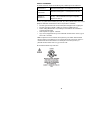
The use of accessory equipment (e.g., printers, etc.) not identified in this manual either in the patient
vicinity, or that does not comply with either the equivalent safety requirements of this equipment or
UL/IEC 60601-1 or IEC 60601-1-2, may lead to a reduced level of safety with the resulting system.
Limitations
• The ProTime instrument uses only fresh capillary or venous whole blood. Plasma or serum cannot be
used. Glass tubes or syringes must not be used to collect venous samples. Use only plastic syringes
without anticoagulants to collect venous samples. Poor fingerstick blood collection technique may
affect results.
• In clinical trials, no significant difference was observed between fingerstick and venous specimens run
on ProTime. During those trials, ProTime measured patients with an INR range of 0.8 to 7.0.
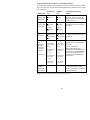
ProTime is programmed to calculate and report INR results as follows:
5