1
tmd042.0614:EIVD_TM.qxd
6/9/2014
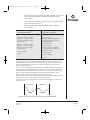
Symptoms
Faint or absent peaks for the
positive control reaction
Extra peaks visible in one
or all color channels
Peak height imbalance
1:18 PM
Page 35
Causes and Comments
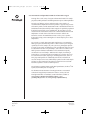
If the positive control reaction failed to amplify, check to
make sure that the correct amount of 2800M Control DNA
was added to the reaction. Due to the reduced cycle numbers
used with swab extracts, it is necessary to increase the mass of
2800M Control DNA to obtain a profile. We recommend 5ng
of 2800M Control DNA per 25μl amplification reaction. This
mass of DNA should be reduced if the cycle number used is
increased and decreased if the cycle number is increased.
Increase or decrease by twofold the mass of 2800M Control
DNA for every one-cycle decrease or increase, respectively.
Improper storage of the 2800M Control DNA.
Swab extract was contaminated. Assemble a reaction
containing the swab extract prepared from a blank swab, or
assemble a reaction where the SwabSolution™ Reagent is
processed as a blank without a swab.
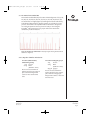
Artifacts of STR amplification. Amplification of swab extracts
with high DNA concentrations can result in artifact peaks due
to overamplification, resulting in saturated signal on the CE
instrument. We recommend 2µl of swab extract per 25µl
reaction. Using more than 2µl in a 25µl reaction or using 2µl
with a smaller reaction volume may result in overamplification
and signal saturation. If signal is saturated, repeat
amplification with less swab extract or reduced cycle number.
Amplification of excess template for a given cycle number
resulted in overloading of the capillary upon electrokinetic
injection. In addition to signal saturation, excess DNA in the
capillary is difficult to maintain in a denatured single-stranded
state. Some single-stranded DNA renatures and becomes
double-stranded. Double-stranded DNA migrates faster than
single-stranded DNA during capillary electrophoresis and
appears as “shadow” peaks migrating in front of the main
peaks (i.e., smaller in size).
Excess DNA in the amplification reaction can result in locus-tolocus imbalance within a dye channel such that the peak heights
at the smaller loci are greater than those at the larger loci (skislope effect). Use less swab extract or reduce cycle number.
Active protease carried over from swab extracts into the
amplification reaction. Larger loci are most suspectible to
protease carryover and will drop out before the smaller loci.
Ensure that the heat block is heating to 70°C (90°C if using
2.2ml, Square-Well Deep Well Plates) and samples were
incubated for the full 30 minutes. Incubation for shorter time
periods may result in incomplete protease inactivation. Do
not use an incubator set at 70°C to incubate tubes or plates.
Heat transfer is inefficient and will result in poor performance.
Only use a heat block to maintain efficient heat transfer.
Inactive SwabSolution™ Reagent. Thaw the SwabSolution™
Reagent completely in a 37°C waterbath, and mix by gentle
inversion. Store the SwabSolution™ Reagent at 2–10°C. Do
not store reagents in the refrigerator door, where the
temperature can fluctuate. Do not re-freeze; avoid multiple
freeze-thaw cycles, as this may reduce activity.
Promega Corporation · 2800 Woods Hollow Road · Madison, WI 53711-5399 USA · Toll Free in USA 800-356-9526 · Phone 608-274-4330 · Fax 608-277-2516 · www.promega.com
Printed in USA.
Revised 6/14
Part# TMD042
Page 35