1
4.14. .OUT
4.14
53
.out
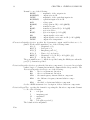
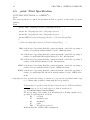
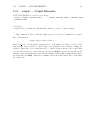
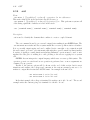
Form:
.out write ( [[<qualifier>] <value>*] <operator> )* in <filename>
This write what is left on the stack into the file filename or
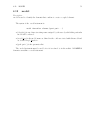
.out system ( [[<qualifier>] <value>*] [<operator>] )* This performs a system call
of the string equivalent of whatever is left on the stack.
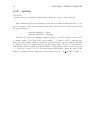
.out h terminal namei h terminal namei h terminal namei h terminal namei
Description:
.out is used to identify the elements that combine to create a coupled element.
The .out command is used to process and output data resulting from a fREEDA run. The
.out statement uses stacks and has a syntax much like a reverse polish notation calculator.
It is a powerful output engine and can be utilized in its own right or in conjunction with
the more usual .print and .plot statements although these provide much less functionality.
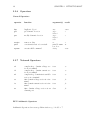
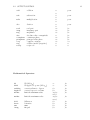
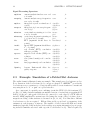
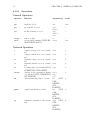
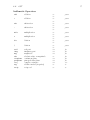
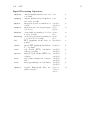
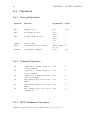
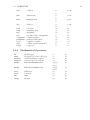
A variety of signal processing functions including arithmetic operators may be used to manipulate the data prior to writing it to a file, plotting to the screen or piping it to a system
call.
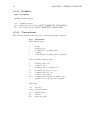
fREEDA has an interpretive output language which uses a reverse polish syntax. The
operators operate on a stack and as an operation is performed zero or more arguments are
consumed by an operator.
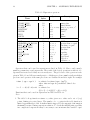
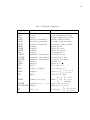
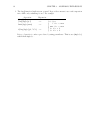
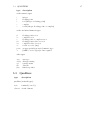
Details of the various options will be shown at the end of this section but for most
situations and netlists, the voltages and currents at the various external ports are to be
written to output files in standard ASCII format. An example is shown below:
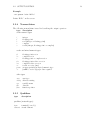
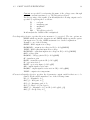
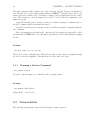
.out write term 1 vt in "1v.out"
.out write term 2 it in "2i.out"
In the first example, the voltage at terminal 1 is written out to file “1v.out”. The second
example writes the current going into terminal 2 to the file “2i.out”.