1
1
Note to Instructors
This exists as a supplemental version of the standard user manual, which is also included
with this product. The purpose of this manual is to introduce you to the phenomenon of
signal fading. The MC 9090 that runs the software included with this manual is capable of
transmitting a radio frequency electromagnetic signal. Just like light, sound, and other types
of signals, electromagnetic signals fade. Fading is dependent on many factors. Among them
are distance and obstacles. This manual is to introduce you to these factors and discusses the
hardware and software used to introduce these concepts to students.
2
System Overview
The electromagnetic signal transmitted by the MC9090 is used to communicate with what
are called Radio Frequency Identification, or RFID tags. RFID tags are available in many
shapes and sizes, but all work approximately the same way. The tags consist of an antenna,
a microchip, and, sometimes, a small battery. The antenna on the tag converts the power in
the signal transmitted by the reader to electricity to power the microchip. The microchip then
sends an identification number back to the MC9090 by transmitting it on the tag’s antenna.
Small batteries are sometimes used to help power the microchip because, as you may find out,
the signal strength decreases in some situations making it more difficult to successfully read the
tag.
3
Fading
Fading is the disruption of a signal due to environmental factors. As the electromagnetic signal
propagates, its strength decays. This is not unlike any other form of signal. In fact, we deal
with this phenomenon every day whether we are aware of it or not. When we speak to one
another from longer distances we have to increase the volume of our voice. The reason for this
is that the strength of the sound coming from the other person decreases the farther the two
people are apart.
The same effect can occur due to obstacles. When there are obstacles in the way, two things
can happen. Firstly, the signal will degrade. When people speak from different rooms of a
house, the sound is often muffled and quieter due to some of the sound’s energy being absorbed
by walls and floors. Secondly, the signal can bounce. When sound reflects off multiple obstacles,
the path travelled by the signal often returns to the place of origin, resulting in an echo. This
is similar to one heard by yelling in a large empty room.
4
Experiments
Different experiments, described here, are designed to experiment with the conditions that cause
fading.
4.1
Experience Packet Loss Due to Distance
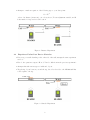
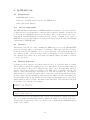
• Stand 50cm from the tag with the MC9090.
• Attempt to read the tag for a 10 seconds.
• Repeat the previous step for distances of 100cm, 150cm ...
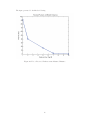
• Count the number of successful reads, R, at each location and plot them.
1