1
Introduction
1.
“Grafische Bedrijfsfondsen”, GBF, is a foundation that invests and performs administrative duties for
the “Pensioenfonds voor de Grafische Bedrijven”, PGB, and other pension funds for the Dutch
printing industry. With nine billion Euros of capital under management, it is a midsized fund and a top
ten player within the Dutch industry funds.
Investing money is a knowledge intensive activity. To do this properly a lot of research is
needed. Since it is very expensive to set up and maintain a department to do research or to purchase it
from external sources, the equity portion of the capital under management is, for the largest part,
outsourced to asset managers.
Although outsourcing provides the benefits of a larger research department and in-depth
knowledge, it also forces GBF to hand over some of its influence, thus creating an Agency-Principal
dilemma. In such a dilemma a way needs to be found for the principal, GBF, to motivate the agent, the
external manager, to act just like the principal would have done if he had the same possibilities
(Sappington, 1991). GBF needs stable growth of its capital, driven by a set of well diversified
investments. On the other hand, the payment scheme of the external managers is composed of a fixed
management fee and a variable fee based on outperformance. Because of this, the managers might get
tempted to adopt a strategy that is more risky than desirable, hoping to maximize the outperformance
and by doing so increase their management fee.
This temptation is limited by contracts stating the maximum exposure to certain elements, thus
restricting the manager. Another restrictive measure is that the investment style of the external
managers is closely monitored. The basis for this is formed by the goals and guidelines laid out in the
investment plan (Grafische Bedrijfsfondsen, 2007). The primary goal is to realize beta returns and on
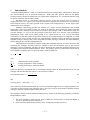
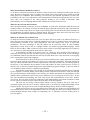
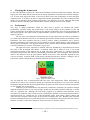
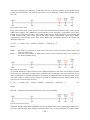
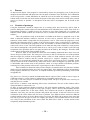
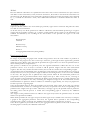
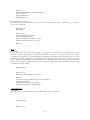
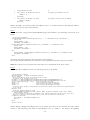
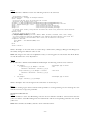
top of that the secondary goal is to generate alpha. Alpha is defined as
(1)
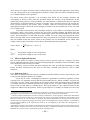
with
αp =
outperformance of the portfolio,
average performance of the portfolio,
average performance of the benchmark.
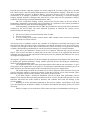
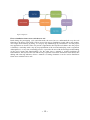
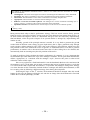
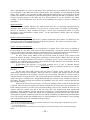
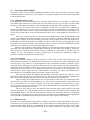
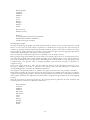
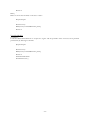
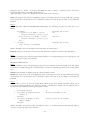
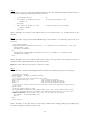
GBF uses the basic assumption that its investments should realize an Information Ratio of 0.25 per
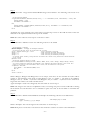
manager with the idea that this will be 0.5 at a total level. Where
(2)
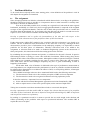
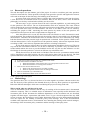
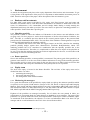
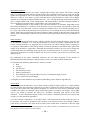
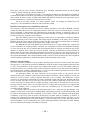
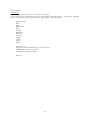
and
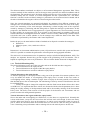
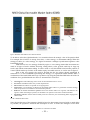
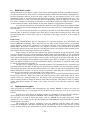
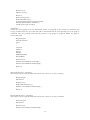
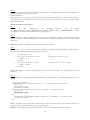
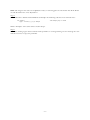
Tracking Error = StDev(RBM – rp)
(3)
The reason why the Information Ratio on a total level should be higher than on a single portfolio level,
is that the average tracking error should be lower. This is the result of diversification benefits between
managers while the expected alpha remains the same.
The managers should reach the aforementioned goals by means of the following guidelines (Grafische
Bedrijfsfondsen, 2007).
1. The stock portfolio’s characteristics have to match the characteristics of their benchmark as
closely as possible (Primary objective).
2. Stock selection should be the primary source of alpha (Secondary objective).
~ 7 ~