1
EN
50%
INTRODUCTION
60%
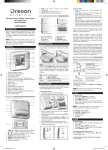
Thank you for selecting the Oregon ScientificTM Heart Rate
Monitor (SE128). The SE128 is a very useful sports &
fitness product that can help you achieve and maintain your
optimum exercise zone by monitoring your heart rate while
exercising. The SE128 bundles a heart rate transmitter and
receiver watch complete with real-time clock, stopwatch,
and backlight functions.
70%
80%
90%
100%
Weight Management
Aerobic Zone
Anaerobic Threshold Zone
Red Line Zone ( maximum capacity )
The upper and lower heart rate limits are calculated
by multiplying your MHR by the percentages of the
selected training zone.
For example:
A 40-year-old user training for basic health
maintenance:
• His Upper Heart Rate Limit [220 - 40(age)] x 78%
• His Lower Heart Rate Limit [220 - 40(age)] x 65%
KNOW YOUR DATA
To help achieve the maximum health benefits from your
workout program, it is important to know your:
• Maximum heart rate (MHR) training zone
• Upper heart rate limit
• Lower heart rate limit
TRAINING ZONES
MHR is expressed in beats per minute. You can get
your MHR from a MHR test, or you can estimate it
using the following formula:
220 - age = MHR
There are several training zones that that are relevant
to a fitness program. The most popular zone range is
from 50% to 80% of your maximum heart rate. This is
where you achieve cardiovascular benefits, burn fat,
and become fitter. When programming your watch, the
lower % of the zone you choose becomes your lower
heart rate limit and the higher % becomes the upper
heart rate limit.
Always warm up before exercise and select the training
zone that best suits your physique. Exercise regularly,
20 to 30 minutes per session, three to four times a
week for a healthier cardiovascular system.
There are three training zones, as described below:
2
SE128 EN R5.indd 2
Moderate Activity
TRAINING
ZONE
MHR%
DESCRIPTION
Health
Maintenance
65-78%
This is the lowest
training intensity
level. It is good
for beginners and
those who want to
strengthen their
cardiovascular
systems.
2007.7.6 10:27:22 AM