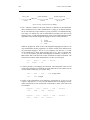
1
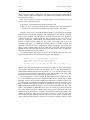
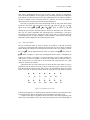
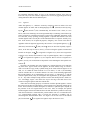
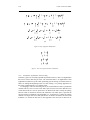
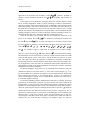
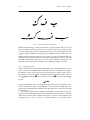
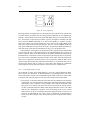
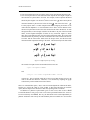
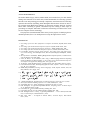
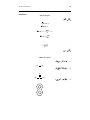
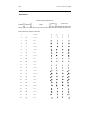
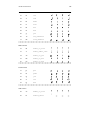
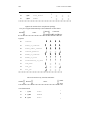
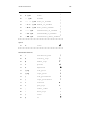
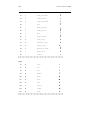
168 J. SROUJI AND D.M. BERRY other letters, grammatically there are only 28 letters. Thus, the table of Appendix II shows the Arabic alphabet as it must appear to any formatting software that is obliged to treat different versions and forms of the same grammatical letter as different characters and that is obliged to treat a diacritical mark as a character. It also has the additional characters that are needed to print Persian and international text. The table of Appendix II also shows the different forms for each of the letters. Most letters have four forms. The four forms of the letter F, which are F, ¼, q, and , appear in the words Fא, ¼ î îî, ¢q, and hאu. There are letters, e.g., N, that naturally do not connect to the following letter because of where they end. These letters have only two forms, stand-alone and connecting-before. Operationally, it will prove convenient to treat all letters as having four forms. In the case of a two-form letter, the connecting-after form is made a duplicate of the stand-alone form and the connectingboth form is made a duplicate of the connecting-before form. 2.2.2 Diacritical marks The use of diacritical marks or vowels in Arabic, as in Hebrew, is optional. In normal, everyday text, a diacritical mark would be used only in the rare case in which it would be hard to identify the intended word from the letters and the context. For example, consider the word ¼ written without diacritical marks. It could be either ¼ î ((he) wrote) or î î ¼ï (book). Normally it is quite easy to distinguish which of these is intended by the ò position in a sentence. The former is a verb and the latter is a noun. There is other text, either poetry or books for children, in which a full complement of diacritical marks is used. In the former case, word order is often inverted, and in the latter case, the young readers do not know the contexts. A diacritical mark is written either above or below the letter after which its vowel is pronounced and also affects the accent or stress of that letter. Figure 1 shows the Arabic letter N with all the possible vowels. Below each is its pronunciation expressed in Latin letters. The input of diacritical marks should be allowed, and each should be printed N î N ï ðN N ñ N ò óN N ô da du di dan don den d N о N о N û N о N о N þ N õ dda ddu ddi ddan ddon dden dd Figure 1. Vocalizations of one letter at the proper height above or depth below the letter that it follows in pronunciation. Here the proper height or depth is determined by the bounding box of the letter itself. A glance at the table of Appendix II shows that some letters differ graphically from others only by the addition of some dots. These dots are part of the letters and should not