1
SST-ASI-SLC User’s Guide
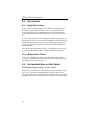
4.7
Powerup Sequence
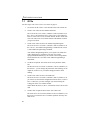
At powerup, the SST-ASI-SLC boot loader checks for a valid module loaded
into the card’s flash. If no valid module exists, the boot loader will prompt the
user to load one. If a module is detected, the boot loader waits two seconds
for the user to enter an “!”, before handing control over to the module.
The module downloads the firmware to the AS-i network controller and then
waits for a command from the SLC or from the serial port.
When the SLC goes into run mode, the module parses the G file and
configures the network controller appropriately. If the G file specifies a
change from the current projected network, the module updates the EEPROM
on the network controller to update the list of projected slaves.
The module then sends the parameters to the slaves and starts the bus
scanning.
4.8
AS-i Faults
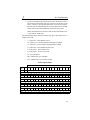
If an error occurs while in run mode, the scanner interrogates bit 14 of word 2
of the G File to determine whether to fault the SLC processor. This fault may
be a recoverable major fault. If an error handler routine is installed (S:29), it
can determine the type of fault (S:6) and act appropriately. If the error routine
clears the major error flag (S2:1/13), the SLC will try to continue in run
mode.
AS-i faults cannot be corrected by the scanner as user intervention is
required. However, if you want to continue scanning, you can set the Fault
Acknowledge bits and the scanner will ignore the error until it reoccurs. The
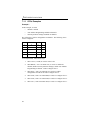
Fault Acknowledge bits are the least significant 4 bits of word 0 in the Output
file. Set Bit 0 for error 61h, bit 1 for 62h, bit 2 for 63h and bit 3 for 64h.
NOTE: 63h and 64h are reserved for future use.
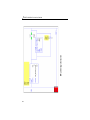
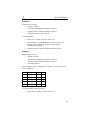
The fault bits may be set ahead of time (at start up) or can be set during the
error handling routine. If they are set during the error handling routine, you
will have to do an IOM instruction, which does an immediate write. The
ladder logic diagram on page 24 shows the IOM instruction.
ATTENTION:
With some versions of the SLC, if your program clears the
main error flag (S2:1/13), it is possible that subsequent
faults on other scanners or SLC processors might not be
reported to the scanner and the scanner will continue
scanning even if the SLC is faulted.
22