1
the new C++ standard, are powerful and flexible. Patterns are represented as
strings which can be specified at run-time. In this case a syntax error in the regular expression, such as unbalanced parenthesis, can be detected only at run-time.
The Boost.Xpressive library, allows an alternative way: regular expressions can
be defined using expression templates and thus they are checked at compilation
time. Regular expressions from Boost.Xpressive can either be statically bound,
hard-coded and syntax-checked by the compiler or dynamically bound and specified at run-time. These regular expressions can refer to each other recursively
and match patterns in strings that ordinary regular expressions can not.
3
Improve Xpressive using Metaparse
Xpressive is a regular expression library from Boost which gives a portable
internal solution, since it doesn’t require any external tool. It follows the second
approach we’ve mentioned in section 1.
Xpressive provides two ways for defining a regular expression (regex):
1. Dynamic Regex We can call the sregex::compile method in runtime to
create a regular expression we specified as a string. This method doesn’t
provide compile time syntax check for the regex, although it retains the
well-known syntax.
2. Static Regex We can build a regex from overloaded C++ expressions, so
called expression templates. This way we have compile time syntax checking,
but we get high syntactical overhead. For example a regular expression in
dynamic regex "(\\w+) (\\w+)!" looks like this in static regex:
(s1= + w) >> ’ ’ >> (s2= + w) >> ’!’
Our goal is to combine the best of these two approaches and give an interface
where we can specify a regex as a string with compile time syntax checking. This
way we can achieve seamless integration without syntactical overhead, thus we
don’t need to escape the domain of regular expressions when we want to use
them in C++.
This can be done with the help of the Metaparse library by writing simpler
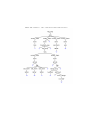
parsers and combining them to build a more complex parser. To identify the
needed parsers we will write a grammar for regular expressions. These individual
parsers are metafunctions with a scope of parsing one element from the grammar.
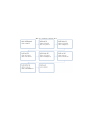
They can process different regex pieces like [abc] or (xyz). We can combine
them as described in section 6, thus we can parse ([abc]xyz) too without writing
a new parser for this expression. We will show a working library which can
parse arbitrary complicated regular expressions and create the respective static
Xpressive regular expressions for them using C++ compiler only.
4
Grammar
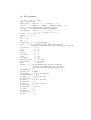
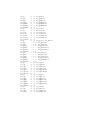
To build a complex parser like this, we need to clearly describe how the possible
regular expression pieces can be used together. The parser needs to know the