1
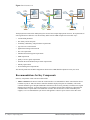
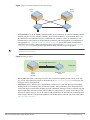
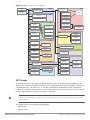
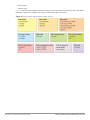
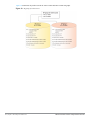
Chapter 7: AP Groups for Client Access When you create an AP group for client access you create a functional WLAN for client access. To create an AP group for client access, you need to configure these: firewall policies and user roles (required) SSID profile (required) server groups, AAA profile (required) VAP profile (required) Adaptive Radio Management (ARM) profile (optional, but recommended) 802.11a radio profile (required) 802.11g radio profile (required) AP system profile (required) 802.11a traffic management profile (optional, but recommended) 802.11g traffic management profile (optional, but recommended) VoIP call admission control profile (optional, but recommended) IDS profile (optional, but recommended) The following chapters explain the configuration of the AP-LC1-6000 and AP-LC2-6000 AP groups for client access. The AP-LC1-6000 AP group is used for all APs that must be managed by the LC1-6000 local controller. The AP-LC2-6000 AP group is used for all APs that must be managed by the LC2-6000 local controller. The APs that belong to one of these two AP groups perform these actions: Broadcast employee, application, and guest SSIDs in both 2.4 GHz and 5 GHz bands. Participate in ARM and band steering. Terminate on VRRP-7 VIP if they are in the AP-LC1-6000 AP group or on VRRP-8 VIP if they belong to the APLC2-6000 AP group. Participate in prioritizing traffic based on SSID and WMM category. Participate in VoIP call admission control. Participate in wireless intrusion prevention. Dell PowerConnect W-Series: Campus Wireless Networks Chapter 7: AP Groups for Client Access | 31