1
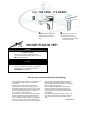
FILL THE TANK...IT'S READY
9
A Make sure the water supply
B After about one minute, the
valve is turned on. Then turn
the dispenser knob and hold it
open.
tank will fill and water will
begin coming out of the faucet.
Turn off the faucet and check all
connections for leaks.
DO NOT PLUG IN YET!
WARNING
Fire/Product Damage
Do not remove or alter the thermal safety fuse.
If you suspect the thermal fuse is open, contact your
Authorized Service Center
ISE
WARNING
Product Damage
Do not connect electric power until tank is filled with
Failure to do so may damage heating element or
thermal
fuse
andsafety
will void your warranty.
Until you have read and understood the following:
Once the electrical cord is plugged in, it will take ten to
15 minutes for the water to reach its 190°F (88°C)*
temperature.
However, when the 190°F (88°C)* temperature is
being reached, you can expect a gurgling or hissing
sound within the tank which is normal. You might also
experience steaming and/or spitting hot water to come
out of the faucet without turning it on. This also is a
normal function on any initial start up.
Now, carefully turn on the faucet for about 20 seconds
to draw off that steaming water and allow the water in
the tank to reheat. Repeat this step one or two more
times. This allows the functional parts of the dispenser
to heat up evenly and work in balance, preventing the
steaming and spitting condition. If steam is still emitted
from the faucet, a thermostat adjustment may be necessary to slightly decrease the water temperature.
(See adjusting temperature procedure). Your dispenser
should now be operating properly.
Note: The dispenser perks like a coffee percolator
just before the electric thermostat shuts it off. The
rumble is caused by gas bubbles being driven off by
the boiling water. This is part of the regular operation
or the dispenser.
High altitudes: High elevations (Denver, Colorado, etc.)
may require the thermostat to be lowered to keep the
water from boiling (see adjusting temperature procedure).
*APPROXIMATE