1
Routine maintenance
Refer to Chapter 7 for information relating to the 1985 on Brazilian models
Introduction
Periodic routine maintenance is a continuous process that
commences immediately the machine is used. It must be
carried out at specified mileage recordings, or on a calendar
basis if the machine is not used frequently, whichever is the
sooner. Maintenance should be regarded as an insurance policy,
to help keep the machine in the peak of condition and to ensure
long, trouble-free service. It has the additional benefit of giving
early warning of any faults that may develop and will act as a
regular safety check, to the obvious advantage of both rider and
machine alike.
The various maintenance tasks are described under their
respective mileage and calendar headings. Accompanying
diagrams are provided, where necessary. It should be remembered that the interval between the various maintenance tasks
serves only as a guide. As the machine gets older or is used
under particularly adverse conditions, it would be advisable to
reduce the period between each check.
For ease of reference each service operation is described in
detail under the relevant heading. However, if further general
information is required, it can be found within the manual under
the pertinent section heading in the relevant Chapter.
In order that the routine maintenance tasks are carried out
with as much ease as possible, it is essential that a good selection of general workshop tools is available.
Included in the kit must be a range of metric ring or combination spanners, a selection of crosshead screwdrivers and at
least one pair of circlip pliers.
Additionally, owing to the extreme tightness of most casing
screws on Japanese machines, an impact screwdriver, together
with a choice of large and small crosshead screw bits, is
absolutely indispensable. This is particularly so if the engine has
not been dismantled since leaving the factory.
Daily (pre-ride check)
prevent the risk of unexpected failure of any component while
riding the machine and, with experience, can be reduced to a
simple checklist which will only take a few moments to
complete. For those owners who are not inclined to check all
items with such frequency, it is suggested that the best course
is to carry out the checks in the form of a service which can be
undertaken each week or before any long journey. It is essential
that all items are checked and serviced with reasonable
frequency.
/
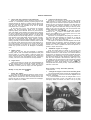
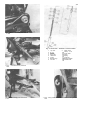
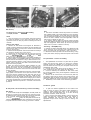
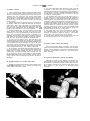
Check the engine oil level
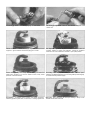
With the machine standing upright on its centre stand on
level ground, start the engine and allow it to idle for a few
seconds so that the oil can circulate, then stop the engine. Wait
one or two minutes for the level to settle and unscrew the
dipstick/filler plug from the rear of the crankcase right-hand
cover. Wipe it clean and insert it into the filler orifice; do not
screw it in, but allow it to rest. Withdraw the dipstick; the oil
level should be between the maximum and minimum level lines,
ie in the cross-hatched area.
If topping up is necessary use only good quality
SAE10W/40 engine oil of the specified type. Do not allow the
level to rise above the top of the cross-hatched area on the
dipstick, and never use the machine if the level is found to be in
the plain area below the cross-hatching; top up immediately.
Tighten the dipstick securely and wash off any spilt oil.
2
Check the fuel level
Checking the petrol level may seem obvious, but it is all too
easy to forget. Ensure that you have enough petrol to complete
your journey, or at least to get you to the nearest petrol station.
3
Check the brakes
It is recommended that the following items are checked
whenever the machine is about to be used. This is important to
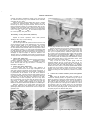
Check the front and rear brakes work effectively and
without binding. Ensure that the cable or rod linkage is
lubricated and properly adjusted.
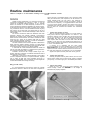
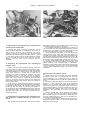
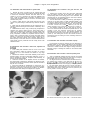
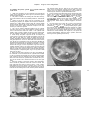
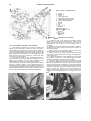
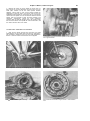
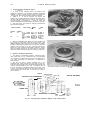
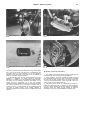
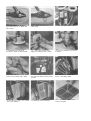
Rest dipstick in position to obtain correct reading
Dipstick shows allowable oil level range