1
Pegasus-E_Copy_Sec.book
77 ページ
2006年2月15日 水曜日 午後1時33分
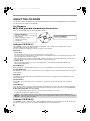
MATERIAL SAFETY DATA SHEET
Page : 3/4
Date Revised : Aug.18, 2003
Date Issued : Jun. 1, 2003
MSDS No. F-01211
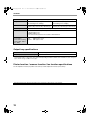
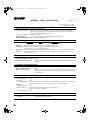
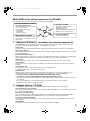
Exposure Limit Values
OSHA-PEL(USA)
ACGIH-TLV(USA)
Personal Protective Equipment
Respiratory Protection
Hand Protection
Eye Protection
Skin Protection
Other Protective Equipment
3
: 15mg/m (Total Dust),
3
: 10mg/m (Total Dust),
3
5mg/m (Respirable Dust)
3
3mg/m (Respirable Dust)
: Not required under intended use.
: Not required under intended use.
: Not required under intended use.
: Not required under intended use.
: Use of a dust mask and goggles are recommended when handling a large
quantity of toner or during long term exposure, as with any non-toxic dust.
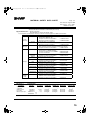
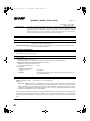
9.PHYSICAL AND CHEMICAL PROPERTIES
Appearance
Physical State : Solid
Ph
Boiling / Melting Point
Softening Point(°C)
Flash Point(°C)
lgnition Point(°C )
Explosion Properties
Density(g/cm³)
Solubility in Water
Form : Powder
Color : Black
: Not applicable
: Not applicable
: 100 - 130
: Not applicable
: > 350
: No data
: 1.1 (bulk density : 0.35)
: Negligible
Odor : odorless
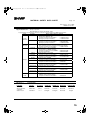
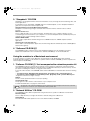
10.STABILITY AND REACTIVITY
Stability
Hazardous Reactions
Conditions to Avoid
Materials to Avoid
Hazardous Decomposition Products
Further Information
: Stable
: Dust explosion, like most finely divided organic powders.
: Electric discharge, throwing into fire.
: Oxidizing Materials
: CO, CO2 and NOX
: None
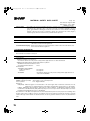
11.TOXICOLOGICAL INFORMATION
Acute Toxicity
Ingestion(oral)
Inhalation
Eye irritation
Skin irritation
Skin sensitizer
Mutagenicity
Carcinogenicity
: LD50 > 2500mg/kg (Rats)
: No Data
: Not an irritant (Rabbits)
: Not an irritant (Rabbits)
: No sensitization
: Negative (Ames Test)
: In 1996 the IARC reevaluated carbon black as a Group 2B carcinogen (possible human
carcinogen). This classification is given to chemicals for which there is inadequate human
evidence, but sufficient animal evidence on which to base an opinion of carcinogenicity. The
classification is based upon the development of lung tumors in rats receiving chronic inhalation
exposures to free carbon black at levels that induce particle overload of the lung. Studies
performed in animal models other than rats did not show any association between carbon black
and lung tumors. Moreover, a two-year cancer bioassay using a typical toner preparation
containing carbon black demonstrated no association between toner exposure and tumor
development in rats.
77