1
M-PSK Modulator Baseband
Purpose
4M-PSK Modulator Baseband
Library
PM, in Digital Baseband sublibrary of Modulation
Description
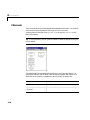
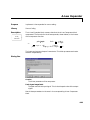
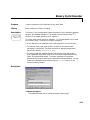
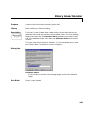
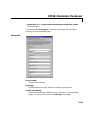
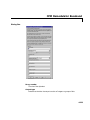
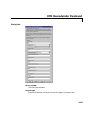
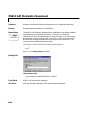
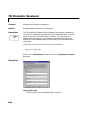
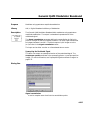
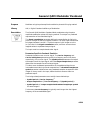
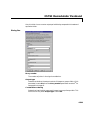
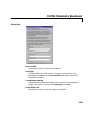
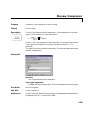
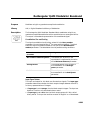
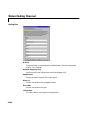
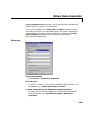
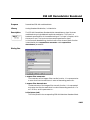
The M-PSK Modulator Baseband block modulates using the M-ary phase shift
keying method. The output is a baseband representation of the modulated
signal. The M-ary number parameter, M, is the number of points in the signal
constellation.
Modulate using the M-ary phase shift keying method
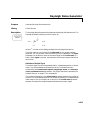
Baseband M-ary phase shift keying modulation with a phase offset of θ maps
an integer m between 0 and M-1 to the complex value
exp(jθ + j2πm/M)
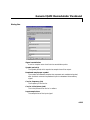
The input and output for this block are discrete-time signals. To use integers
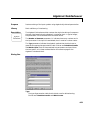
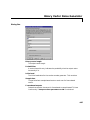
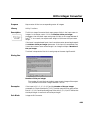
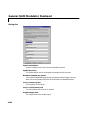
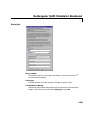
between 0 and M-1 as input values, set the Input type parameter to Integer.
In this case, the input can be either a scalar or a frame-based column vector.
Alternative configurations of the block determine how the block interprets its
input and arranges its output, as explained in the sections below.
Binary Inputs
If the Input type parameter is set to Bit and the M-ary number parameter has
the form 2K for some positive integer K, then the block accepts binary
representations of integers between 0 and M-1. It modulates each group of K
bits, called a binary word. The input can be either a vector of length K or a
frame-based column vector whose length is an integer multiple of K.
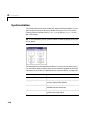
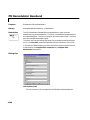
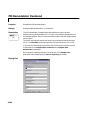
In binary input mode, the Constellation ordering parameter indicates how
the block maps a group of K input bits to a corresponding integer. Choices are
Binary and Gray. For more information, see “Binary-Valued and
Integer-Valued Signals” on page 2-68.
If Constellation ordering is set to Gray, then the block uses a Gray-coded
signal constellation; as a result, binary representations that differ in more than
one bit cannot map to consecutive integers modulo M. The explicit mapping is
described in “Algorithm” below.
4-311