1
Ultrasonic staking
Ultrasonic staking is an assembly method in which the controlled
melting and reforming of a plastic stud is used to capture or
lock two components together. This method employs the use of
a plastic stud on one part, which protrudes through a hole or slot
on the second part. The vibrational energy applied by the
ultrasonic horn is used to melt the plastic; the plastic is deformed
by pressure applied to the staking horn. After deforming, the
plastic quickly cools in its new position, locking the two parts
together.
Ultrasonic staking offers several advantages, including short
cycle times, good repeatability and control, tight locking, and
the ability to form multiple stakes at one time. This has been
proven as an acceptable method for joining parts manufactured
from Eastman™ polymers to parts manufactured from other
materials, such as steel.
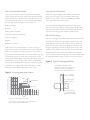
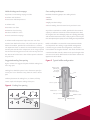
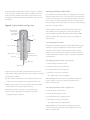
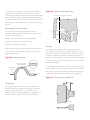
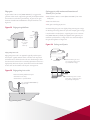
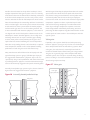
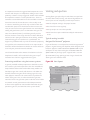
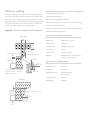
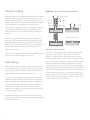
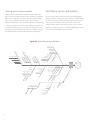
There are several acceptable ultrasonic horn head forms. Typical
dimensions and designs are shown in Figure 33.
Heat staking
Heat staking is similar to ultrasonic staking, offering several of
the same advantages. Heat staking has been shown to provide
equal or greater strength compared to ultrasonic staking when
proper staking guidelines are followed (Figure 33).
It is best to “dial-in” optimized conditions for each individual
application. A good starting temperature for Eastar™ copolyesters
and DuraStar™ polymers is 260°C (500°F). Raise the temperature
gradually until the polymer begins to stick to the horn, then
back off by 6°–8°C (10°–15°F). This is the optimum horn
temperature. The object is to melt the plastic post tips quickly
without burning the material.
The optimum pressure should also be “dialed-in.” Begin with
low pressure, gradually increasing until a complete and properly
shaped head is formed.
36
Figure 33 Ultrasonic/heat-staking methods
2D
Radius
at stud
base
required
Staking horn
D
Radius
2
2D
D
0.5D
1.6D
Nonthermoplastic plate
Welding similar materials
Ultrasonic and heat staking should be limited to applications
where parts made of Eastar™ copolyesters and DuraStar™
polymers are staked to parts composed of other materials.
™
We have found that when
0.5D staking two Eastar copolyesters or
™
two DuraStar polymers together, a slight melt interface forms
where the deformed head pushes down against the mating
2.1D
piece. This can form “melt microcracks,” which can propagate
under loading, forming a brittle joint. For best results, limit heat
and ultrasonic staking to applications in which the plastics have
a melting temperature difference of at least 22°C (40°F). We
suggest using alternative joining methods (permanent snap fits,
ultrasonic welding with shear joints, hot plate welding, screws,
inserts, adhesives, etc.) in this situation.