1
16
1962 OPERATORS’ MANUAL
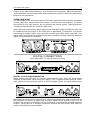
1962 FRONT PANEL DIGITAL CONTROLS:
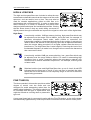
Sample Rate:
This switch selects 48.0KHz, 44.1KHz and EXTernal clock for synchronising
to other digital devices. Any external clock input is ‘cleaned’ by the D62 PLL
and output at the rear panel BNC connector marked WORD SYNC Out.
Reduce monitor volume levels before casually selecting ‘EXT CLK’, selecting
it without any external clock connected results in a nasty 0dBfs digital noise
being output!
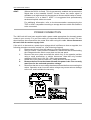
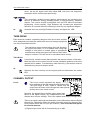
Word Length:
Selects the word length (bit resolution) of the audio samples to be 24, 20, 18
or 16 bits. Match this to your digital recording, storage or processing device.
Selecting ‘16’ sends 4 x stereo pairs of tracks to the TDIF output, while 24,20
and 18 sends high resolution tracks to the TDIF for recording on tracks 1,2,3
or 5,6,7.
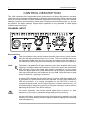
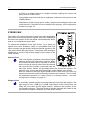
Source:
Select ‘Chs’ for the most direct audio path (thus: highest performance) to the
D62 analogue-to-digital convertor, or ‘MIX’ which inserts the CHAN PAN
controls to the path. MIX also enables up to 3 additional analogue inputs (eg.
stereo outputs from other 1962 units) to be mixed via the rear panel Stereo
Mix inputs to the master D62 digital output. Pre- or post- output level control
is selectable on two internal jumper links. See configuration jumpers section
on page 19.
In all configurations the audio signal to the D62 passes through a ‘Soft clip’
circuit, therefore short transient audio peaks will not cause noticeable
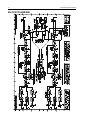
distortion on the digital outputs. See the Block Diagram
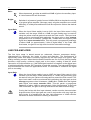
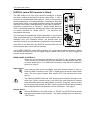
Dither:
1 - 12:
This affects the type of dither added to the audio signal when recording with
WORD LENGTH less than 24 bits. Position 1 is generally the best
compromise and places all of the dither noise at the high end of the audio
spectrum, where the ear is least sensitive. In the majority of situations, this
will produce excellent results. The other 10 positions progressively reduce
the level of the dither, spreading it further down the audio spectrum. Position
11 is standard ‘White noise’ dither and position 12 is dither OFF. See
DITHER SELECTOR OPTIONS table, on the following pages for more
details.
Care must be taken when applying heavy (more than +30dB) post EQ HF
boost to noise shaped dithered recordings as excessive HF levels can be
generated, possibly causing damage to speaker tweeters.
Noise shaped dither is effective when a WORD LENGTH is selected of less
than 24 bits. It effectively decreases distortion and noise on low level signals
when compared with unshaped dithering; an apparent digital noise floor
reduction of 12 to 18dB should be perceived.