1
1
Location
Safety Precautions
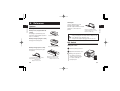
Do not locate the printer in the area subjected to high
humidity or dew. If dew forms inside the printer,
immediately turn off the printer and do not use it until
it has been dried up. Continued use creates the
danger of electric shock or the printer damage.
Power
Do not use wet hands to operate the power switch,
replace the battery pack or unplug the AC adapter or
battery charger. Doing so creates the danger of
electric shock.
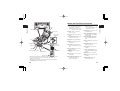
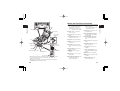
Thermal Head and Stepping Motor
• The thermal head gets very hot after printing. Take
care when replacing paper or cleaning the printer
just after printing to avoid burn.
• Touching the end of the thermal head with bare
hands may cause injury. Take care when replacing
paper or cleaning the printer to avoid injury.
• Do not try to replace the thermal head by yourself.
Doing so creates the danger of injury, burn, or
electric shock.
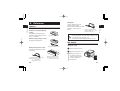
Easy Cutter
This part contains a blade. Take care to avoid cutting
your hands.
10
Warning
1
This device complies with Part 15 of the FCC Rules.
Operation is subject to the following two conditions:
(1) This device may not cause harmful interference, and
(2) This device must accept any interference received,
including interference that may cause undesired operation.
FCC Caution:
Changes or modifications not expressly approved by the manufacturer
for compliance could void the user's authority to operate the equipment.
NOTE : This equipment has been tested and found to comply with the
limits for a Class B digital device, pursuant to Part 15 of the FCC Rules.
These limits are designed to provide reasonable protection against
harmful interference in a residential installation. This equipment
generates and can radiate radio frequency energy and, if not installed
and used in accordance with instructions, may cause harmful
interference to radio communications. However, there is no guarantee
that interference will not occur in a particular installation.
If this equipment does cause harmful interference to radio or
television reception, which can be determined by turning the equipment
off and on, the user is encouraged to try to correct the interference by
one or more of the following measures:
- Reorient or relocate the receiving antenna.
- Increase the separation between the equipment and receiver.
- Connect the equipment into an outlet on a circuit different from that to
which the receiver is connected.
- Consult the dealer or an experienced radio/TV technician for help.
11
Safety Precautions
Caution