1
Canoga Perkins
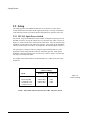
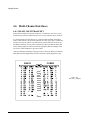
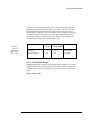
NOTE: The pulse distortion is 37% of the bit period at a data rate of
1.544 Mbps. When using this operating mode, it is important to con
sider the effect of this large distortion on the connected equipment.
Sampled External Clock Mode does not use the Rate Switches.
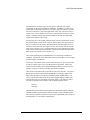
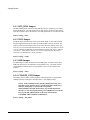
3.2.2 Locked External Clock Mode - Mode 7
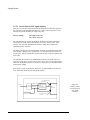
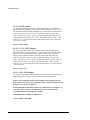
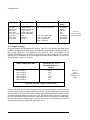
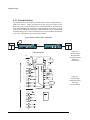
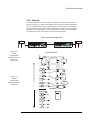
When the customer-supplied clock is within certain ranges, this mode allows transmission of clock and data signals with minimal jitter. In the Locked mode, the entire
transmitter section of the 2240 is locked to the clock provided by the DTE. The Locked
mode is always used for T1 (1.544 Mbps), E1 (2.048 Mbps), any synchronous data
transmission between 1.490 Mbps and 2.060 Mbps and possibly at lower speeds if the
customer's equipment cannot tolerate the pulse jitter of the sampled external clock
mode.
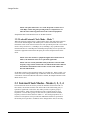
NOTE: Since the customer's equipment supplies the transmit clock in
Mode 7, the 2240 turns off its ST or equivalent signal leads.
NOTE: The use of front panel DIP switch position 8 to select the LOW
frequency ranges shown in Table 3-B is an enhancement feature added to
the 2240 after mid-summer 1996. Earlier versions of the 2240 do not
have this enhancement.
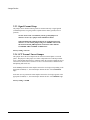
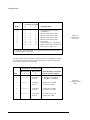
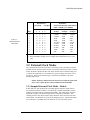
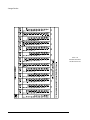
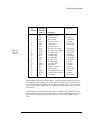
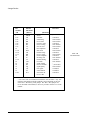
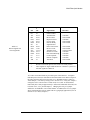
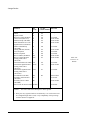
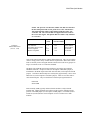
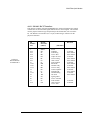
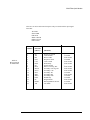
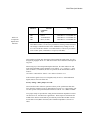
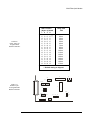
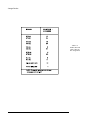
Set the Rate switches to the appropriate setting for your data rate. Refer to Table 3-B
for the rate switch settings and the range of data rates which use the Locked External
Clock Mode. If the desired data rate falls below 128 kHz, the Sampled External Clock
Mode must be used.
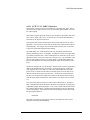
3.3 Internal Clock Modes - Modes 1, 2, 3, 4
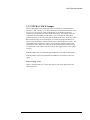
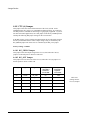
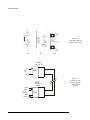
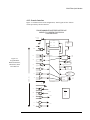
The internal clock modes are used to provide the Transmit Clock for the DTE. In
these modes, the modem sends the clock to the DTE on the Send Timing (ST), or
equivalent, signal leads. Each of the four modes provides a separate group of
clock frequencies. Each of the four modes provides a separate group of clock
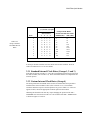
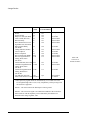
frequencies. The first three groups of clock rates are synthesized from standard
frequency references and are shown in Table 3-C. The fourth group allows for a
custom set of frequencies to be provided if an additional oscillator is specified for
the modem prior to purchase. Oscillators can be changed in the field, if necessary.
32