1
Spectrex Inc. - SharpEyeTM Mini IR3 Flame Detector
Manual – TM 787100, Rev. D April 2011
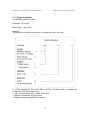
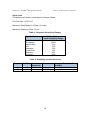
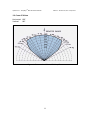
After careful investigation, three channels were selected which, when operating
jointly, provide optimal fire detection characteristics:
Channel 1:
4.2 µ - 4.6 µ
Fire - the CO2 peak
Channel 2:
4.0 µ - 4.2 µ
Eliminates false alarms from high temperature sources.
Channel 3:
4.8 µ - 5.2 µ
Eliminates false alarms from flickering of background radiation.
Most IR sources, which create misleading IR alarm stimuli, including the sun,
incandescent and halogen lamps, electric arc discharges, electrical heaters, etc.,
do not possess this unique spectral signature of fire.
The IR sensors of the detector respond only to flickering of radiation signals. The
signals are compared to a predetermined threshold. Processing of the results from
the three IR channels is performed by the board microprocessor. The result is a
much greater detection distance and a highly increased ability to distinguish
between fire and false alarms.
This sophisticated technology surpasses all other existing flame detection
techniques on the market today.
This unique flame analysis capability (patent pending) has been
incorporated into the Triple-IR fire detector manufactured by Spectrex, Inc.
The result is a unique flame detector, which does not produce false alarms
and provides at the same time detection over greatly increased distances.
2.1.5 Modbus RS-485
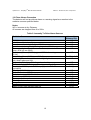
For more advanced communication 20/20MI has a RS 485 modbus Compatible
output that provides Data communication from a network (up to 247 detectors) to
a host computer on universal controller for central monitoring.
This feature enables easy maintenance local and remote diagnostic tools.
2.1.6 Use in Hazardous Atmosphere
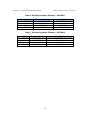
The 20/20MI certified version is intrinsically safe, classified to
ATEX EX II 1GD T 1 23 ºC
per SIRA 04 ATEX 2010 (for St.St housing)
and SIRA 04 ATEX 2011X (for aluminum housing)
EEx ia IIC T4 (Ta= -40ºC to + 85ºC)
EEx ia IIC T5 (Ta= -40ºC to + 65ºC)
The detectors are suitable for use in hazardous zones 0, 1 and 2 where group IIC
gasses and vapor are present.
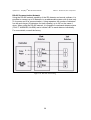
In order to comply with the intrinsic safety requirement, barriers must be
incorporated (in the safe area) and there will be restrictions on cable types and
lengths. The detailed parameter will be dependent on the type of barrier used.
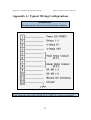
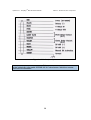
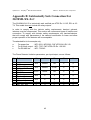
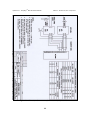
See Appendix B for I.S. wiring detail
4