1
I. Safety Concerns
IA. Safety Symbol Explanation
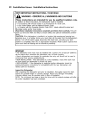
m = Warning symbol included in Installation Instructions and on this page. It includes serious warnings
such as injury or death, electric shock & dishwasher damage.
IB. Identify Potential Hazards
There are few hazards associated with dishwashers. Two possible hazards are:
m Electrical shock hazard (as with any electrical appliance).
m Sharp edges – only on tank when sump is removed and on inner door when dispenser is removed.
IC. Warning Personal Injury
m Danger of electric shock. Disconnect power before disassembling or working on dishwashers. Make
sure dishwashers are electrically grounded. Use only copper conductors for all wiring or rewiring.
ID. Warning Property Damage
Only warning on property damage comes from improper water connections – overly tightened water
connections could cause water to leak from water inlet valves. This only applies to older models with water
inlet valves with vertical solenoids (coils). Newer models with water inlet valves with horizontal solenoids
(coils) have water connections integrated with mounting brackets to eliminate possibility of damaging valves
from overtightening water fittings.
IE. Electrostatic Sensitive Devices
None since all control modules have pc boards mounted in plastic housings – no pc boards are handled in
repairing dishwashers.
II. Product Line Related
IIA. CFC Information
There are no CFC’s or any other refrigerant used in dishwashers.
IIB. Emissions Related
There are no emissions related to dishwashers. Occasionally smells come from customer drains into
dishwashers if dishwashers weren’t properly connected to drains.
IIC. CO
No carbon monoxide is emitted by dishwashers.
IID. Government Compliance Issues
None.
IIE. Certification Requirements
All dishwashers are designed, tested and certified by UL for use in the U.S. and Canada. In addition, all
dishwashers are Energy Star certified as energy savers. Many dishwashers have NSF sanitized wash
cycles.
2