1
Changing the Blade
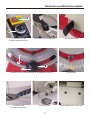
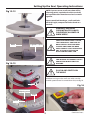
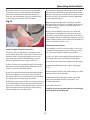
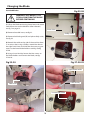
5) Repeat the process for the upper blade holder, see
fig 32.
Fig 32
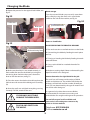
Blade storage
If you have several blades you can, easily store them
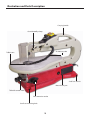
away safely by using the scroll saw’s spare blade
holder to the side of the machine, see fig 34.
Fig 34
Cradle recess
Spare blade holder
Blade pins
Blade
Notes on Saw Blades
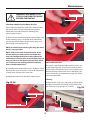
Fig 33
BLADES BREAK FOR FIVE PRINCIPAL REASONS
Blade tensioning lever
1. Too much tension or too little tension on the blade.
2. Overworking the blade by feeding the work piece
too fast.
3. Twisting or bending the blade by feeding the work
piece off-centre.
4. Over use, the blade has reached the end of its
useful life.
6) Make sure that the pins are seated correctly in
both cradles. Re-tension the blade by turning the
tensioning lever clockwise then press down the
lever to lock the tension, see fig 33.
5. Maximum cutting depth 50mm and exceeding the
depth for which it was designed.
7) Close the access door below the table, replace the
table insert and re-attach the blade guard assembly
(B).
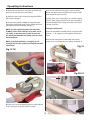
The scroll saw will accept a wide variety of blade
widths and thicknesses. The width of the blade, the
thickness of the blade and the number of teeth per
inch (TPI) are determined by the type of material and
size of the radius being cut.
8) Start the scroll saw and check everything running
correctly. If all OK, switch off the saw.
Clear away any tools
around the work area.
PLUG IN and switch on
the mains.
How to determine the right blade for the job
As a general rule, select the narrowest blades
recommended for intricate curve cutting and
widest blades for straight and large curve operations.
See our full range of scroll saw blades and
accessories in our catalogue or contact us by
phone or visit our website.
Telephone: 03332 406406
Online: axminster.co.uk
18