1
(6) When to Use the High-Pass Filter Switch
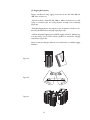
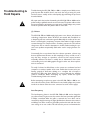
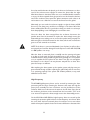
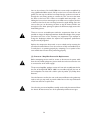
The High-Pass Filter Switch is very effective when the APL-220, -500, and 800 are utilized with subwoofers, or other larger speaker systems.
For example, a system may be made up primarily of FH-4s, 3X3s, or other
large concert type speakers, with APL-500 speakers flown below them for
downfill. Additional APL-500 speakers might be located on the apron of the
stage to fill the front rows where direct coverage by the larger speakers is
absent. More APL-500 speakers might be located towards the rear of the
venue as "delay fills." In all three cases, using the High-Pass Filter Switch is
recommended. There is probably enough low-frequency energy already present in the venue from the larger speakers and subwoofers, so reducing the
low-frequency output of the APL-500 fill speakers should improve the overall sound quality as well as allow the APL-500 speakers to be operated safelyat higher levels.
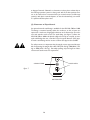
(7) Care in Using the High-Pass Filter Switch
Because the action of the High-Pass Filter Switch cannot easily be reversed
without direct access to the switch itself, it is important to make sure the
switch is in the desired position before the speaker system is flown (or otherwise placed in a location where it is difficult to access).
The High-Pass Filter Switch significantly reduces the amount of low-frequency energy the speaker system will reproduce and, thus, should not be used
indiscriminately.
NOTE: If an APL-220, -500, or -800 is installed in a difficult-to-access location
and it’s determined that the switch position is opposite to that which is
desired, it’s possible to employ an equalizer to compensate for either switch
position: Flat or High-Pass Filter. To emulate the High-Pass Filter mode of the
switch, you will need a precision outboard equalizer equipped with a 80 Hz,
12 dB/octave High-Pass Filter. Undoing the effect of the High-Pass Filter
Switch is a bit harder. The equalizer will need to be able to produce the
inverted response of a 80 Hz, 12 dB/octave High-Pass Filter, something that
is not usually obtainable from most equalizers.
You will also need enough time to set the equalizer properly, and however
good the equalizer might be, it will contribute additional noise and signal
degradation to the system’s response. Therefore, it is strongly recommended
that the High-Pass Filter Switch be positioned to best advantage for the particular application before the loudspeaker is flown or located in an area that
is difficult-to-access.
21