1
Before you start
Sketch your application
The ECL Comfort controller series is designed for a wide
range of heating, domestic hot-water (DHW) and cooling
systems with different configurations and capacities.
If your system differs from the diagrams shown in section
10, you may want to make a sketch of the system about to
be installed. This makes it easier to use the Installer’s Guide,
which will guide you step-by-step from installation to final
adjustments before the end-user takes over.
The controller is pre-programmed with factory settings that are
shown in the relevant sections of this guide.
However, you might come across some settings that are not listed
in this instruction. These settings could be related either to recent
updates or the use of optional modules (which are described in
the instructions in question).
How to use this guide
This guide is divided into two parts:
• User’s Guide:
Yellow sections 1-7
• Installer's Guide: Grey sections 10 and onwards
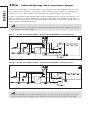
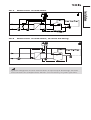
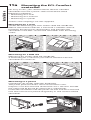
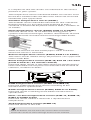
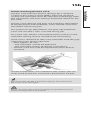
The application C17 is very flexible. These are the basic principles:
Typically, the tank temperature (S6) is adjusted according to your
requirements. The charging temperature sensor (S2) is the most
important sensor. The desired charging temperature at S2 is set in
the ECL controller (line C, yellow side).
If the measured DHW temperature (S6) is lower than the desired
charging temperature minus the cut-in difference, charging
starts. The charging pump, P2, is switched ON.
When the measured DHW temperature (S5) is higher than the
desired charging temperature minus the cut-out difference,
charging stops.
The motorized control valve (M1) is opened gradually when the
charging temperature is lower than the desired charging
temperature and vice versa.
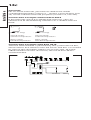
Typically, the return temperature (S4) to the district heating
supply should be as low as possible. If not so, the desired
charging temperature can be adjusted.
The S1 temperature can correct the proportional band (Xp).
Typically, the Xp must be increased at a rising S1 temperature.
VI.KT.O1.02
Card C17
2008.07
The S3 temperature gives a feedback to the DHW charging
temperature (S2). If the S3 temperature is too low, the desired
temperature at S2 will be increased.