1
Comply with the regulations and recommendations in unit
and HVAC installation safety standards, such as: EN 378,
ISO 5149, etc.
Do not use oxygen to purge lines or to pressurize a machine
for any purpose. Oxygen gas reacts violently with oil,
grease, and other common substances.
Never exceed the specified maximum operating pressures.
Verify the allowable maximum high- and low-side test
pressures by checking the instructions in this manual and
the pressures given on the unit name plate.
Do not use air for leak testing. Use only refrigerant or dry
nitrogen.
Do not unweld or flamecut the refrigerant lines or any refrigerant circuit component until all refrigerant (liquid and
vapour) has been removed from chiller. Traces of vapour
should be displaced with dry air nitrogen. Refrigerant in
contact with an open flame produces toxic gases.
The necessary protection equipment must be available,
and appropriate fire extinguishers for the system and the
refrigerant type used must be within easy reach.
Do not siphon refrigerant.
Avoid spilling liquid refrigerant on skin or splashing it into
the eyes. Use safety goggles. Wash any spills from the skin
with soap and water. If liquid refrigerant enters the eyes,
immediately and abundantly flush the eyes with water and
consult a doctor.
ATTENTION: No part of the unit must be used as a
walkway, rack or support. Periodically check and repair
or if necessary replace any component or piping that
shows signs of damage.
Do not step on refrigerant lines. The lines can break under
the weight and release refrigerant, causing personal injury.
Do not climb on a machine. Use a platform, or staging to
work at higher levels.
Use mechanical lifting equipment (crane, hoist, winch, etc.)
to lift or move heavy components. For lighter components,
use lifting equipment when there is a risk of slipping or
losing your balance.
Use only original replacement parts for any repair or component replacement. Consult the list of replacement parts
that corresponds to the specification of the original equipment.
Do not drain water circuits containing industrial brines,
without informing the technical service department at the
installation site or a competent body first.
Close the entering and leaving water shutoff valves and
purge the unit hydronic circuit, before working on the
components installed on the circuit (screen filter, pump,
water flow switch, etc.).
Periodically inspect all valves, fittings and pipes of the
refrigerant and hydronic circuits to ensure that they do
not show any corrosion or any signs of leaks.
Never apply an open flame or live steam to a refrigerant
container. Dangerous overpressure can result.
It is recommended to wear ear defenders, when working
near the unit and the unit is in operation.
During refrigerant removal and storage operations follow
applicable regulations. These regulations, permitting conditioning and recovery of halogenated hydrocarbons under
optimum quality conditions for the products and optimum
safety conditions for people, property and the environment
are described in standard NFE 29795.
2 - Moving and siting the unit
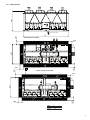
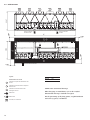
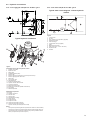
Refer to the certified dimensional drawings for the units.
2.1 - Moving
See chapter “Installation safety considerations”.
2.2 - Siting the unit
It is dangerous and illegal to re-use disposable (non-returnable) cylinders or attempt to refill them.. When cylinders
are empty, evacuate the remaining gas pressure, and move
them to a designated place for recovery. Do not incinerate.
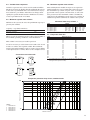
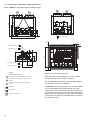
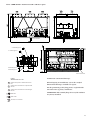
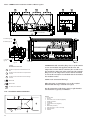
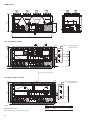
Always refer to the chapter “Dimensions and clearances”
to confirm that there is adequate space for all connections
and service operations. For the centre of gravity coordinates,
the position of the unit mounting holes, and the weight
distribution points, refer to the certified dimensional
drawing supplied with the unit.
Do not attempt to remove refrigerant circuit components
or fittings, while the machine is under pressure or while it
is running. Be sure pressure is at 0 kPa before removing
components or opening a circuit.
Typical applications of these units do not require earthquake
resistance. Earthquake resistance has not been verified.
Do not attempt to repair or recondition any safety devices
when corrosion or build-up of foreign material (rust, dirt,
scale, etc.) is found within the valve body or mechanism.
If necessary, replace the device. Do not install safety
valves in series or backwards.
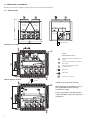
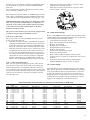
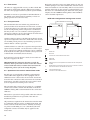
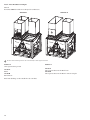
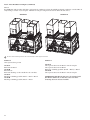
CAUTION: Only use slings at the designated lifting
points which are marked on the unit.
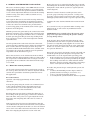
Before siting the unit check that:
• the permitted loading at the site is adequate or that
appropriate strenghtening measures have been taken.
• the unit is installed level on an even surface (maximum
tolerance is 5 mm in both axes).