1
42
Parameters
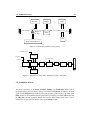
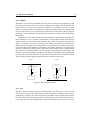
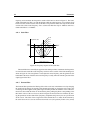
frequency and to attenuate the frequencies outside of this band as shown in Figure 27. The bandwidth of the band-pass filter is set with the Q knob while the center frequency is set with the Cutoff
knob. The Order control sets the order of the filter. This parameter affects the slope of the roll-off
on both sides of the center frequency. For a second order filter the slope is -6dB/Oct while for a
fourth order filter it is -12dB/Oct.
4.11.4
Notch Filter
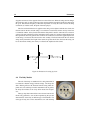
Q=10
Q=4
Amplitude (dB)
Q=2
Q=1
0dB
−3dB
Center
Frequency
Frequency (Hz)
Band Width (Q=1)
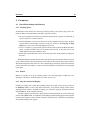
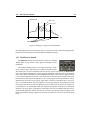
Figure 28: Frequency response of the notch filter.
The notch filter does essentially the opposite of the band-pass filter. It attenuates the frequencies
in a band located around the center frequency and leaves those outside of this band unchanged as
shown in Figure 28. The Cutoff knob is used adjust the center frequency and the Q knob sets the
bandwidth of the notch. Note that the center frequency is totally removed from the spectrum of the
output signal of the filter.
4.11.5
Formant Filter
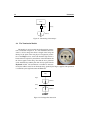
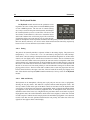
The formant filter reproduces the filtering effect of the vocal tract in the human voice. By changing
the position of the tongue, the opening of the mouth and opening or closing the nasal cavities one
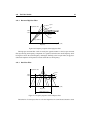
can change the filter applied to the glottal signal and thus produce the different vowels. Measurements have shown that this filter can be modeled by three peaking EQ filters corresponding to the
three main cavities of the vocal tract as shown in Figure 29 and also known as formants. By moving the parameters of these three filters (frequency, amplitude and Q-factor) one can cycle between
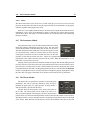
all the vowels. The effect of the Cutoff knob on the formant filter is to offset all the formants by
the same factor and it is used to switch between male voice (left position), female voice (center)