1
Chapter 8
Modern Spectrum Analyzers
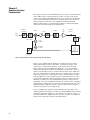
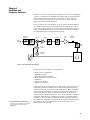
In previous chapters of this application note, we have looked at the
fundamental architecture of spectrum analyzers and basic considerations
for making frequency-domain measurements. On a practical level, modern
spectrum analyzers must also handle many other tasks to help you accomplish
your measurement requirements. These tasks include:
• Providing application-specific measurements, such as adjacent channel
power (ACP), noise figure, and phase noise
• Providing digital modulation analysis measurements defined by industry
or regulatory standards, such as GSM, cdma2000, 802.11, or Bluetooth
• Performing vector signal analysis
• Saving data
• Printing data
• Transferring data, via an I/O bus, to a computer
• Offering remote control and operation over GPIB, LAN, or the Internet
• Allowing you to update instrument firmware to add new features and
capabilities, as well as to repair defects
• Making provisions for self-calibration, troubleshooting, diagnostics,
and repair
• Recognizing and operating with optional hardware and/or firmware to
add new capabilities
Application-specific measurements
In addition to measuring general signal characteristics like frequency and
amplitude, you often need to make specific measurements of certain signal
parameters. Examples include channel power measurements and adjacent
channel power (ACP) measurements, which were previously described in
Chapter 6. Many spectrum analyzers now have these built-in functions
available. You simply specify the channel bandwidth and spacing, then press
a button to activate the automatic measurement.
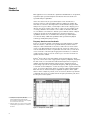
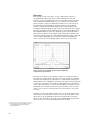
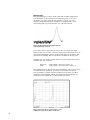
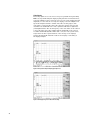
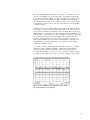
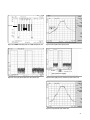
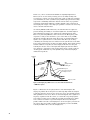
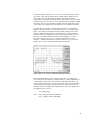
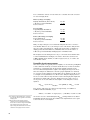
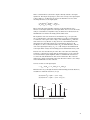
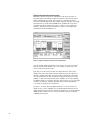
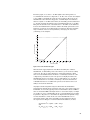
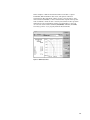
The complementary cumulative distribution function (CCDF), showing
power statistics, is another measurement capability increasingly found in
modern spectrum analyzers. This is shown in Figure 8-1. CCDF measurements
provide statistical information showing the percent of time the instantaneous
power of the signal exceeds the average power by a certain number of dB.
This information is important in power amplifier design, for example,
where it is important to handle instantaneous signal peaks with minimum
distortion while minimizing cost, weight, and power consumption of
the device.
102