1
B
A
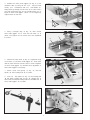
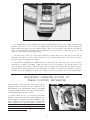
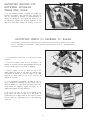
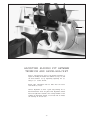
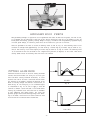
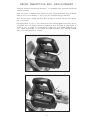
Fig. 43
AUXILIARY WOOD FENCE
When performing multiple or repetitive cut-off operations that result in small cut-off pieces, one inch or less,
it is possible for the saw blade to catch the cut-off pieces and project them out of the machine or into the
blade guard and housing, possibly causing damage or injury. In order to limit the possibility of personal injury
or blade guard damage, an auxiliary wood fence can be mounted to your saw as follows:
Holes are provided in the fence to attach an auxiliary fence (A) and (B) Fig. 43. This auxiliary fence is constructed of straight wood approximately 1/2 inch thick by 3 inches high by 20 inches long as shown at (B);
and 1/2 inch thick by 4-3/4 inches high by 20 inches long as shown at (A) Fig. 43. NOTE: The auxiliary fence
(A) is used O N LY with the saw blade in the 0 degree bevel position (90 degrees) to the table. When bevel
cutting (blade tilted) the auxiliary fence will have to be removed.
BLADE
CUTTING ALUMINUM
FENCE
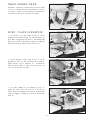
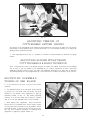
Aluminum extrusions such as used for making aluminum
screens and storm windows can easily be cut with your
miter saw.When cutting aluminum extrusions, or other
sections that can be cut with a saw blade and are within
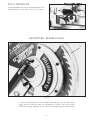
the capacity of the machine, position the material so the
blade is cutting through the smallest cross-section, as
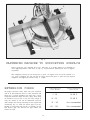
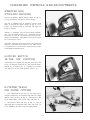
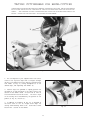
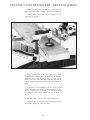
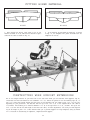
shown in Fig. 44. The wrong way to cut aluminum angles
is illustrated in Fig. 45. Be sure to apply a stick wax
(similar to Johnson s stick wax #140) to the blade before
cutting any aluminum stock. This stick wax is available
at most industrial mill supply houses. The stick wax
provides proper lubrication and keeps chips from adhering to the blade. N E V E R APPLY LUBRICANT TO THE
B L A D E WHILE THE MACHINE IS RUNNING.
RIGHT
Fig. 44
BLADE
FENCE
WRONG
Fig. 45
23