1
Basic Saw Operations (continued)
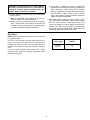
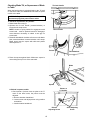
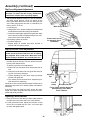
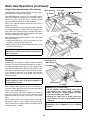
Using Featherboards for Non Thru-Sawing
Work Support
Featherboards are not employed during non thru-sawing
operations when using the miter gauge.
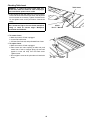
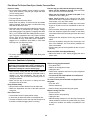
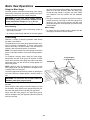
Use featherboards for all other non thru-sawing operations (when sawblade guard must be removed). Featherboards are used to keep the work in contact with the
fence and table as shown and to stop kickbacks.
Add a 7-1/2” high flat facing board to the fence, the full
length of the fence.
Mount featherboards to facing board and table as shown,
so that leading edges of featherboards will support workpiece until cut is complete, and the workpiece has been
pushed completely past the cutter (sawblade, dado-head,
etc.) with a push stick, as in ripping.
Before starting the operation (switch “OFF” and blade
below table surface):
1. Install featherboards so they exert pressure on the
workpiece; be positive they are secure.
2. Make sure by trial the featherboards will stop a kickback if one should occur.
“C” Clamp
Featherboard
“C” Clamp
Facing Board
Push Stick
WARNING: For your own safety, replace the sawblade guard as soon as the non thru-sawing operation is complete.
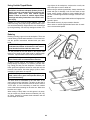
Auxiliary Fence/
Work Support
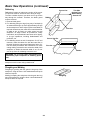
Resawing
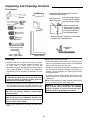
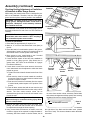
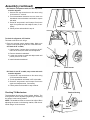
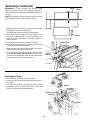
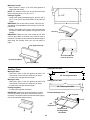
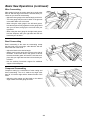
Resawing is a rip cut made in a piece of wood through its
thickness. The piece is typically positioned on its edge. If
the piece is narrower than 3-3/8" it can be resawn in one
pass with the blade guard in place. Extra supports or fixtures will be required when the edge resting on the table
is too narrow for the piece to be stable and when the
fence interferes with the blade guard. (See method
described below)
“C” Clamp
WARNING: Do not attempt to resaw bowed or
warped material. It can’t be properly supported. It
could kickback or bind.
Workpiece
Wood Block
“C” Clamp
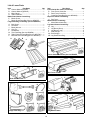
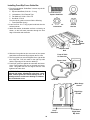
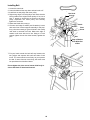
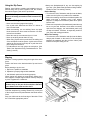
NOTE: To resaw a piece of wood wider than 3-3/8”, or a
piece needing extra support, it will be necessary to
remove the blade guard and use the auxiliary fence/work
support. (See “Workfeed Devices”.)
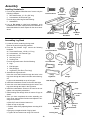
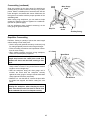
Clamp the auxiliary fence/work support to the table so
that the workpiece will slide easily without binding
between the two fences and it will not tilt or move sideways.
Do not clamp directly to the bottom edge of the table
because the “swivel” of the clamp will not grip properly.
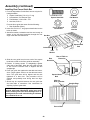
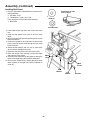
Place a small block of wood between the bottom edge of
the table and the “C” clamp.
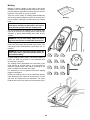
WARNING: For your own safety
1. Do not “Backup” (reverse feeding) while resawing because this could cause a kickback.
2. Make first pass to a depth slightly more than
one half the width of the board.
3. Keeping the same face of board against the
fence rotate it end over end and make the second pass.
WARNING: For your own safety, install blade guard
immediately upon completion of the resawing
operation.
42