1
General Description
GCA40–215
Message Deposit
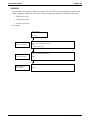
This messaging feature allows station users to call an LCD speakerphone and arrange for a message to be left
on its display. The message is for the called party to read if he or she is unable to answer the caller.
Message Waiting
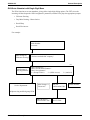
A special feature access code allows a station user to control the message waiting (MW) light at other stations
in the system. When the message waiting light is turned on at a station, the user can automatically call the
station that turned it on. Stations that include an LCD display show the source of the message.
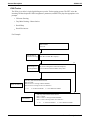
The installer can program one station as the central message desk and arrange it for exclusive message waiting
control. The central message desk user can control message waiting lights and deliver messages to and from all
other stations in the system. The installer can also provide a programmable button for placing and retrieving
message waiting calls. Single line telephones only utilize central message desk signaling. A station can have as
many 8 message waiting lights stacked at one time.
Inhibit Message Wait Stutter Dialtone
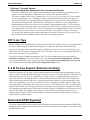
Installers can take programming action to enable or disable the stutter intercom dial tone received at a station to
indicate a message waiting. You can program this item as a station COS parameter.
MF-DID/EM Line Board Support
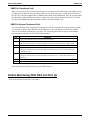
The multipurpose line board (product code FXEMDD–MF and FXEMDD–DF) for the FXT digital
communications system provides R1 multifrequency ANI over analog DID lines. This 10-port line board
supports the functionality of DID, E-911, and two-wire E&M tie lines. When installers first add the
FXEMDD–MF board to a master cleared system, that system defaults its first 10 line ports to this board and
configures the first eight ports as DID lines and the last two ports as E&M tie lines. Installers can change these
assignments through programming to E-911 lines (ports 1–8) and E&M DINIS lines (ports 9 and 10) if they
wish.
Mnemonic Programming
Refer to the discussion titled Programmable Button Flexibility.
Modem Support
The system supports the operation of an internal serial data modem. This is a general-purpose, 14,400 bps
maximum, automatic baud detect, serial data modem that receives its configuration programming from the CPU
board on which it resides. The FXT defaults a pilot number (extension 5999) that off-site users can call to
receive a modem connection. installers select the line for modem use and also arrange for night answer by the
modem.
General Description 6 – 65