1
8.1
GPS protocols
8.1.1
TAIP
TAIP is configured using a single command string. Read Trimble’s TAIP documentation to learn how to create a
command that meets your needs.
The modem listens on UDP port 21000 for TAIP commands, allowing its configuration to be modified on the fly by
software applications that support TAIP.
8.1.2
NMEA
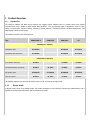
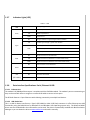
NMEA uses one or more of the following seven pre-defined, fixed-format messages.
Table 10 – NMEA messages information
Contents
Message
Size
GGA
Time, position, and various status information
75 bytes
GLL
Latitude, longitude, and time
48 bytes
GSA
GPS DOP and active satellites
63 bytes
GSV
Active satellites in view
70 bytes
RMC
Time, date, position, course, and speed
67 bytes
VTG
Track made good and ground speed
37 bytes
ZDA
Time and date
35 bytes
Refer to Trimble’s NMEA 0183 documentation for additional information.
8.2
Odometer
The modem can keep track of the total distance traveled by aggregating the data obtained from the GPS fixes. It
calculates the distance traveled based on a straight line between the current and previous fix. By appending these
calculations to a total, the modem is able to keep track of the total distance travelled. When using the NMEA protocol,
the GPS fix is updated every second, so the odometer can be very accurate. However, when using the TAIP protocol, the
GPS fix is acquired as per the configured fix acquisition timer. If the timer is set to a high value such as 5 minutes, then
the odometer will most likely be inaccurate.
8.3
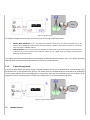
Configuring the modem for GPS reporting
Note
If the modem is configured to report GPS fixes to a remote destination, then the reporting frequency determines the
cellular network bandwidth consumption. A higher reporting frequency will result in higher bandwidth consumption. Plan
carefully to ensure you do not exceed your monthly bandwidth plan.
The modem can be configured to report GPS in two ways: