1
Using the refrigerator efficiently
When shopping for food
Fruit and vegetables
The freshness of food when first placed
in the appliance is an important factor
in determining how long it stays fresh.
Time out of the refrigerator e.g. during
transportation should be kept to a
minimum. For example, do not allow
food to stay in a hot car for too long.
Once food has started to deteriorate,
this process cannot be reversed. As
little as two hours outside the
refrigerator can cause food to start
deteriorating.
Fruit and vegetables may be stored
loose in the vegetable containers.
However, you should bear in mind that
aromas and flavours can transfer from
one type of food to another (e.g. carrots
absorb the smell and flavour of onions
very easily). Some food also gives off a
natural gas (ethylene) which speeds up
the rate at which other food perishes.
Some fruit and vegetables react
strongly to this gas and should not be
stored together.
Storing food correctly
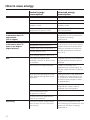
– Examples of fruit and vegetables
which produce a large amount of
this natural gas are:
Store food covered or packaged. This
will prevent food smells from affecting
other foods, food from drying out, and
also any cross-contamination of
bacteria. The growth of bacteria, such
as salmonella, can be avoided by
setting the correct temperature and
maintaining good standards of hygiene.
Apples, apricots, pears, nectarines,
peaches, plums, avocado, figs,
blueberries, melons and beans.
– Examples of fruit and vegetables
which react strongly to the natural
gases given off by other types of
fruit and vegetables are:
Kiwis, broccoli, cauliflower, Brussels
sprouts, mangos, honeydew melons,
apples, apricots, cucumbers,
tomatoes, pears, nectarines and
peaches.
Example: Broccoli should not be
stored with apples, as apples
produce a large amount of natural
gas to which broccoli is very
sensitive. The result is a shorter than
expected storage time for the
broccoli.
19