1
6.3 Email
Email, or electronic mail, is a modern form of communication with many advantages. It is flexible, fast and direct, and
played a crucial role in the proliferation of the Internet in the early 1990‘s.
Unfortunately, with a high level of anonymity, email and the Internet leave room for illegal activities such as spamming.
Spam includes unsolicited advertisements, hoaxes and proliferation of malicious software – malware. The
inconvenience and danger to you is increased by the fact that the cost of sending spam is minimal, and authors of spam
have many tools to acquire new email addresses. In addition, the volume and variety of spam makes it very difficult to
regulate. The longer you use your email address, the more likely it will end up in a spam engine database. Some hints
for prevention:
If possible, don’t publish your email address on the Internet
Only give your email address to trusted individuals
If possible, don’t use common aliases – with more complicated aliases, the probability of tracking is lower
Don’t reply to spam that has already arrived in your inbox
Be careful when filling out Internet forms – be especially cautious of options such as “Yes, I want to receive
information”.
Use “specialized” email addresses – e.g., one for business, one for communication with your friends, etc.
From time to time, change your email address
Use an Antispam solution
6.3.1 Advertisements
Internet advertising is one of the most rapidly growing forms of advertising. Its main marketing advantages are
minimal costs and a high level of directness; what’s more, messages are delivered almost immediately. Many companies
use email marketing tools to effectively communicate with current and prospective customers.
This type of advertising is legitimate, since you may be interested in receiving commercial information about some
products. But many companies send unsolicited bulk commercial messages. In such cases, email advertising crosses the
line and becomes spam.
The amount of unsolicited email has become a problem and it shows no signs of slowing. Authors of unsolicited email
often attempt to disguise spam as legitimate messages.
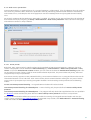
6.3.2 Hoaxes
A hoax is misinformation which is spread across the Internet. Hoaxes are usually sent via email or communication tools
like ICQ and Skype. The message itself is often a joke or Urban Legend.
Computer Virus hoaxes try to generate fear, uncertainty and doubt (FUD) in the recipients, bringing them to believe
that there is an “undetectable virus“ deleting files and retrieving passwords, or performing some other harmful activity
on their system.
Some hoaxes work by asking recipients to forward messages to their contacts, perpetuating the hoax. There are mobile
phone hoaxes, pleas for help, people offering to send you money from abroad, etc. It is often impossible to determine
the intent of the creator.
If you see a message prompting you to forward it to everyone you know, it may very well be a hoax. There are many
websites on the Internet that can verify if an email is legitimate. Before forwarding, perform an Internet search on any
message you suspect is a hoax.
6.3.3 Phishing
The term phishing defines a criminal activity which uses techniques of social engineering (manipulating users in order to
obtain confidential information). Its aim is to gain access to sensitive data such as bank account numbers, PIN codes,
etc.
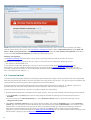
Access is usually achieved by sending email masquerading as a trustworthy person or business (e.g., financial
institution, insurance company). The email can look very genuine, and will contain graphics and content which may
have originally come from the source it is impersonating. You will be asked to enter, under various pretenses (data
verification, financial operations), some of your personal data – bank account numbers or usernames and passwords.
All such data, if submitted, can easily be stolen and misused.
Banks, insurance companies, and other legitimate companies will never request usernames and passwords in an
unsolicited email.
107